
Grain merchandisers face rising cost risks

Key points
- Heavy farmer selling has shifted grain ownership to elevators, increasing inventory and financing requirements.
- Large commercial short hedges create substantial margin-call risk during grain market rallies.
- Higher grain prices and interest rates have significantly raised inventory carrying costs.
- Limited futures carry, particularly in wheat and soybeans, may not fully offset storage and financing expenses.
- Rising fuel surcharges and freight costs could put pressure on basis and reduce merchandising margins.
Grain companies are entering the 2026/27 marketing year with larger-than-normal ownership positions, elevated commodity prices and a highly uncertain market outlook. Farmers have been aggressive sellers during recent rallies in corn, soybeans and wheat, transferring ownership of grain to elevators and cooperatives earlier than usual. At the same time, higher interest rates, volatile futures markets and rising transportation costs are increasing the amount of working capital required to manage those inventories.
These conditions create three major risks for grain merchandisers: increased exposure to margin calls, higher inventory carrying costs and rising transportation expenses. Together, these factors point to larger and earlier liquidity requirements for grain companies and their lenders.
As commercial ownership grows, so does margin-call exposure
Farmers have sold grain aggressively during the recent price rally. Several elevators report they could exit harvest with ownership of roughly 50% of the local corn and soybean crop, compared with a more typical 35% to 40%. This reflects a broader trend in which producers increasingly sell grain at harvest and maintain market exposure through futures, options or other marketing tools rather than storing physical bushels.
Higher grain prices have encouraged this behavior. With corn futures approaching $5 per bushel, many farmers view current prices as attractive and prefer immediate cash flow over the costs and risks associated with storing grain. Financial pressures have also encouraged quicker sales. Elevators report that producers are requesting payment sooner than normal and are often delivering grain directly against existing contracts.
This trend was evident during wheat harvest, where producers sold much of their crop directly across the scale instead of retaining ownership. Many market participants believe farmers were discouraged by last year’s experience of holding grain in anticipation of higher prices that never materialized. As a result, producers appear more willing to reward rallies with cash sales this season.
When farmers sell grain, ownership shifts to elevators and cooperatives. To manage price risk, these companies hedge inventory using short futures positions. As ownership rises, hedge positions become larger. Commercial grain traders are now holding one of the largest net short positions in recent years across corn, soybeans and wheat.
The challenge is that large short futures positions can create substantial margin-call exposure during a rally. While the physical grain gains value when prices rise, losses on the short futures position must be settled immediately through margin payments. The gain on inventory is often not realized until the grain is sold and shipped, creating a temporary liquidity gap.
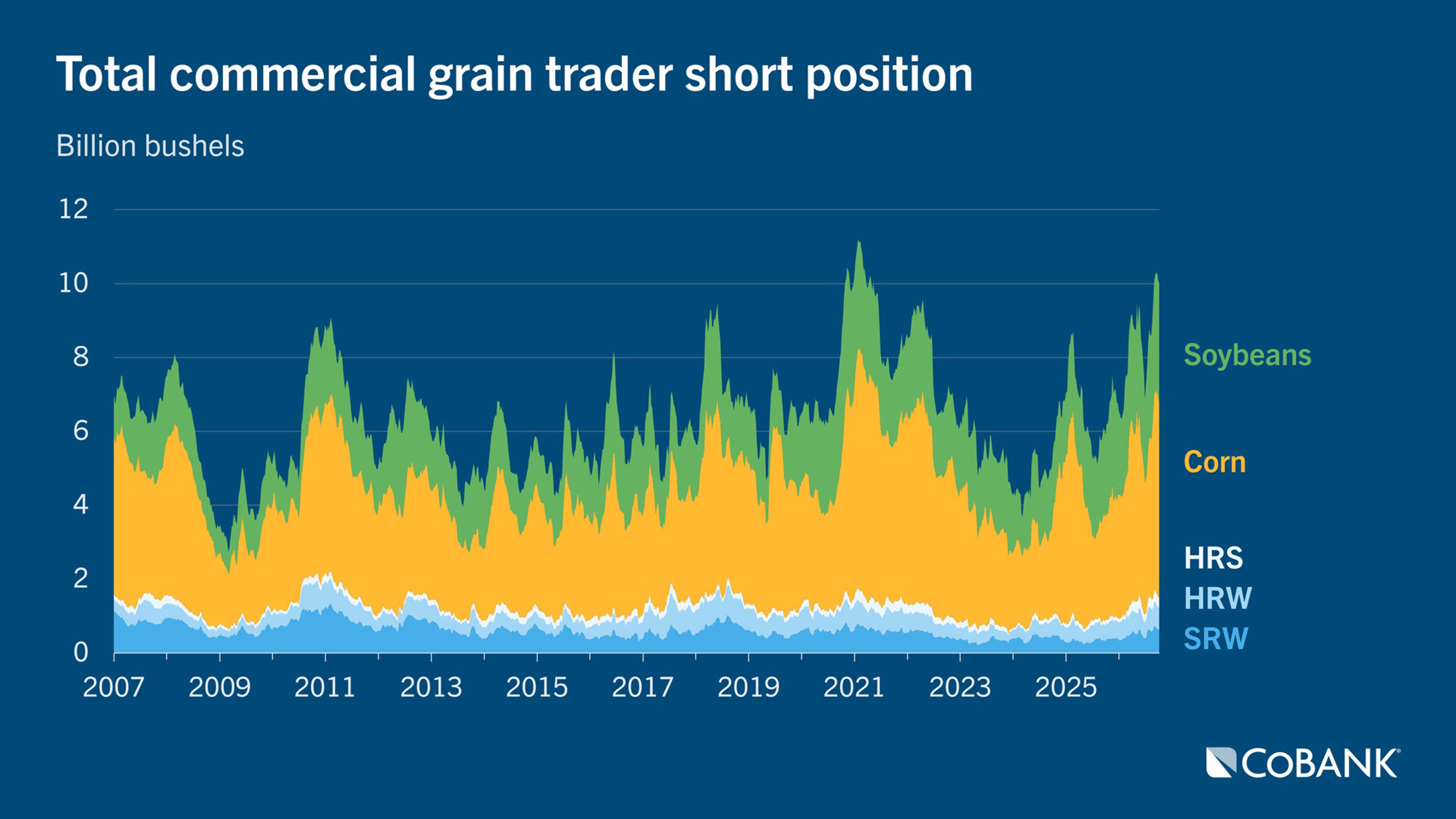
Industry estimates suggest a $1-per-bushel rally across corn, soybean and wheat futures would generate approximately $9.6 billion in margin calls for commercial grain firms. For lenders, this creates a significant funding risk. Borrowers may require additional liquidity quickly, particularly during periods of heightened market volatility.
Market uncertainty remains elevated. Production concerns in parts of the Corn Belt, geopolitical tensions, energy prices and export demand all have the potential to trigger price swings. Regional crop quality conditions add further uncertainty. Wet harvest conditions have resulted in quality issues, with elevators reporting high moisture and sprouted corn, raising drying and blending costs.
Some regions have also reported higher levels of discolored soybeans, including Soybeans of Other Colors (SBOC) and Purple Mottled or Stained (PMS), both caused by wet conditions during seed development. USDA’s Federal Grain Inspection Service notes that although SBOC is not a grade-determining factor for soybeans, a level above 10% changes the class from Yellow Soybeans to Mixed Soybeans. FGIS applies a special “Purple Mottled or Stained” grade to samples with high visual PMS levels. Changes in class or grade may violate contract requirements for some end users, which raises blending costs for merchandisers.
Higher grain prices and interest rates raise the cost of carry
Carrying grain comes at a higher cost this year. Carrying costs are influenced by grain prices, interest rates, storage expenses and the length of time grain remains in inventory. All of these costs have increased in recent years.
The impact of higher grain prices is straightforward. Financing $5 corn requires substantially more capital than financing $3 corn. For companies holding millions of bushels, even small increases in interest rates can significantly increase borrowing expenses.
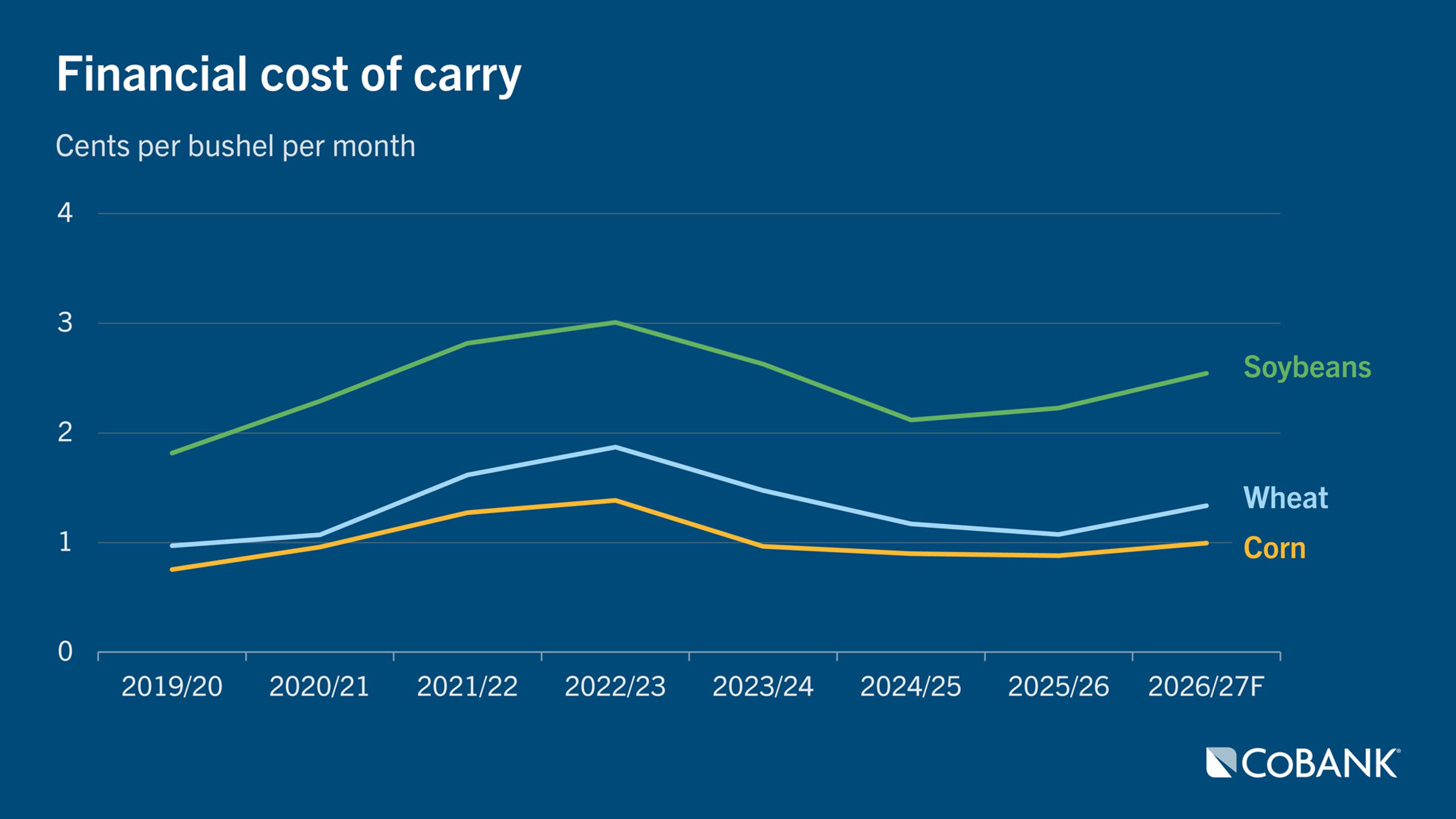
The economics of carrying grain also depend on futures market structure. Ideally, futures spreads widen enough to compensate owners for storage and financing costs. However, futures spreads are not always widening enough in today’s market.
Wheat presents the greatest concern. Market participants note that available carry in wheat may not adequately cover financing and storage expenses. Flat basis levels and narrowing futures spreads reduce merchandising opportunities and make wheat ownership less attractive. Under these conditions, grain companies may incur storage costs without sufficient compensation from the market.
Corn currently offers a more favorable carry structure, allowing merchandisers to recover a larger share of holding costs. Larger inventories, though, still increase borrowing needs. If grain movement slows because of transportation constraints, inventory ownership could remain elevated well into the winter, increasing seasonal liquidity needs.
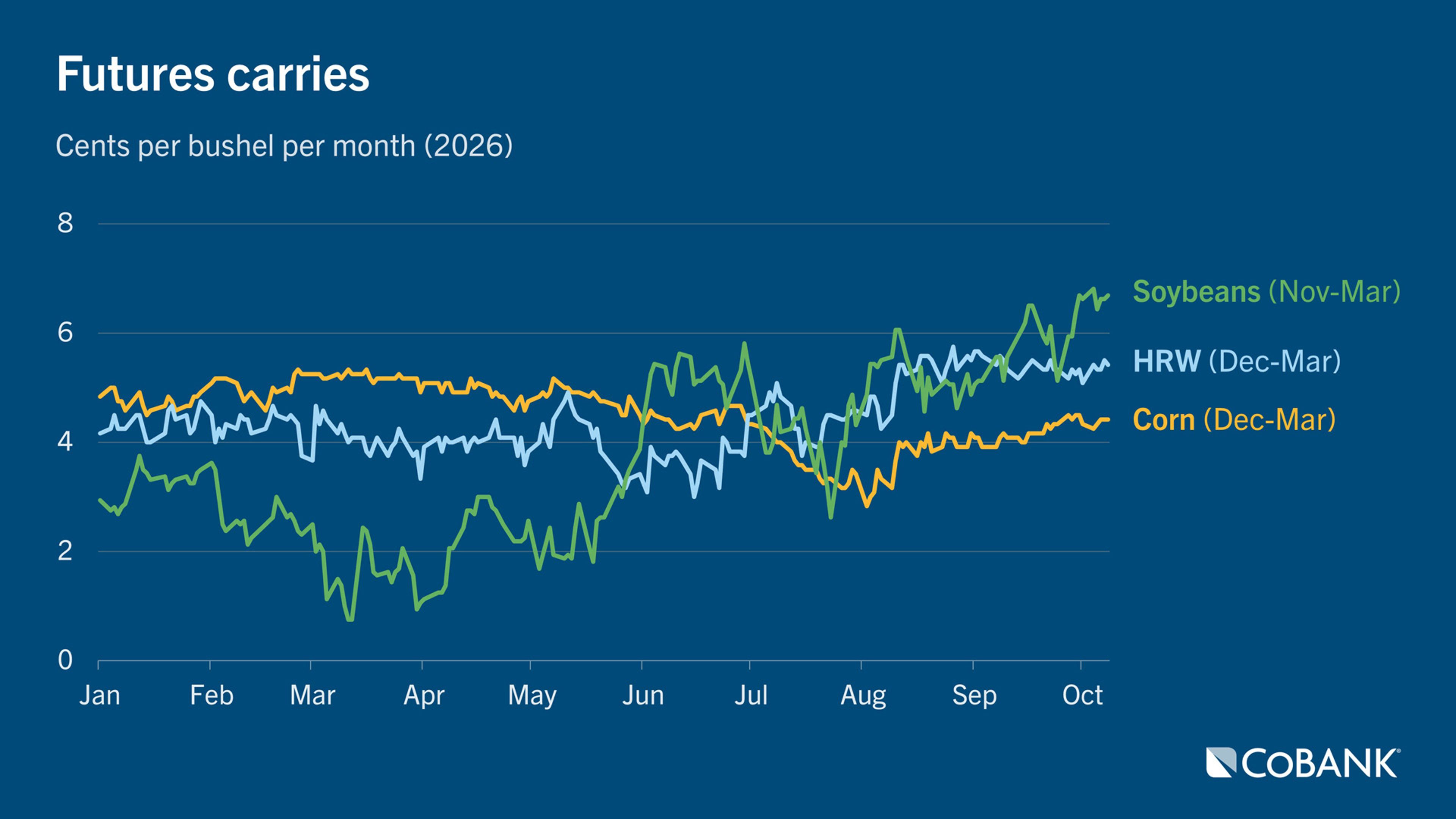
Soybeans provide less carrying opportunity than corn, encouraging grain companies to move bushels more quickly. However, transportation and processing logistics may limit how quickly inventories can be reduced. Export demand for soybeans may slow with another potentially record-large Brazilian harvest, while expanding domestic soybean crush capacity is redirecting bushels toward processors in local markets.
Transportation and fuel costs threaten local basis
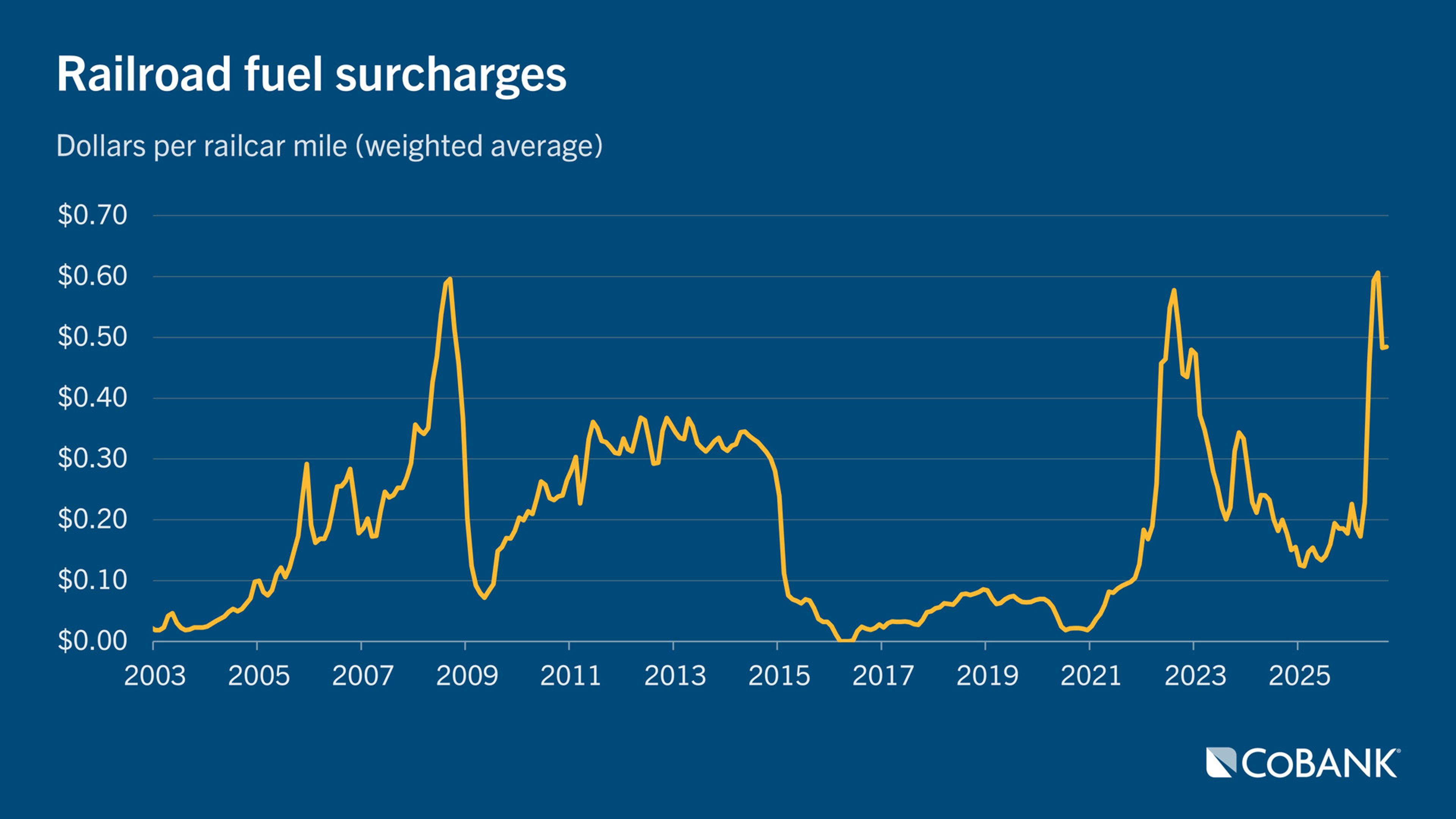
Rising transportation rates add to the cost burden for grain merchandisers. Higher diesel prices, railroad fuel surcharges and elevated freight rates have substantially increased the cost of moving grain from country elevators to processors, livestock feeders and export markets.
Higher shipping costs ultimately affect local cash bids. A railroad surcharge of 50 cents per railcar-mile over a 1,000-mile shipment translates to approximately 14 cents per bushel. If end users are unwilling to absorb the additional transportation cost, elevators must recover it through weaker local bids, effectively widening basis.
Current fuel costs may not yet be fully reflected in the marketplace. The effect may become more apparent after harvest when grain movement increases and transportation demand intensifies. If fuel costs remain elevated, elevators may face a choice between accepting lower margins, widening basis levels or delaying shipments.
Freight availability is another concern. Heavy farmer selling has increased commercial ownership, but transportation capacity may not be sufficient to move the grain quickly. Rail and barge systems could face congestion if elevators attempt to market larger inventories simultaneously.
The interaction between transportation costs and grain ownership creates a compounding effect. Slower movement increases inventory levels, higher inventories increase financing costs, and larger inventories require expanded hedge positions that create additional margin-call exposure.
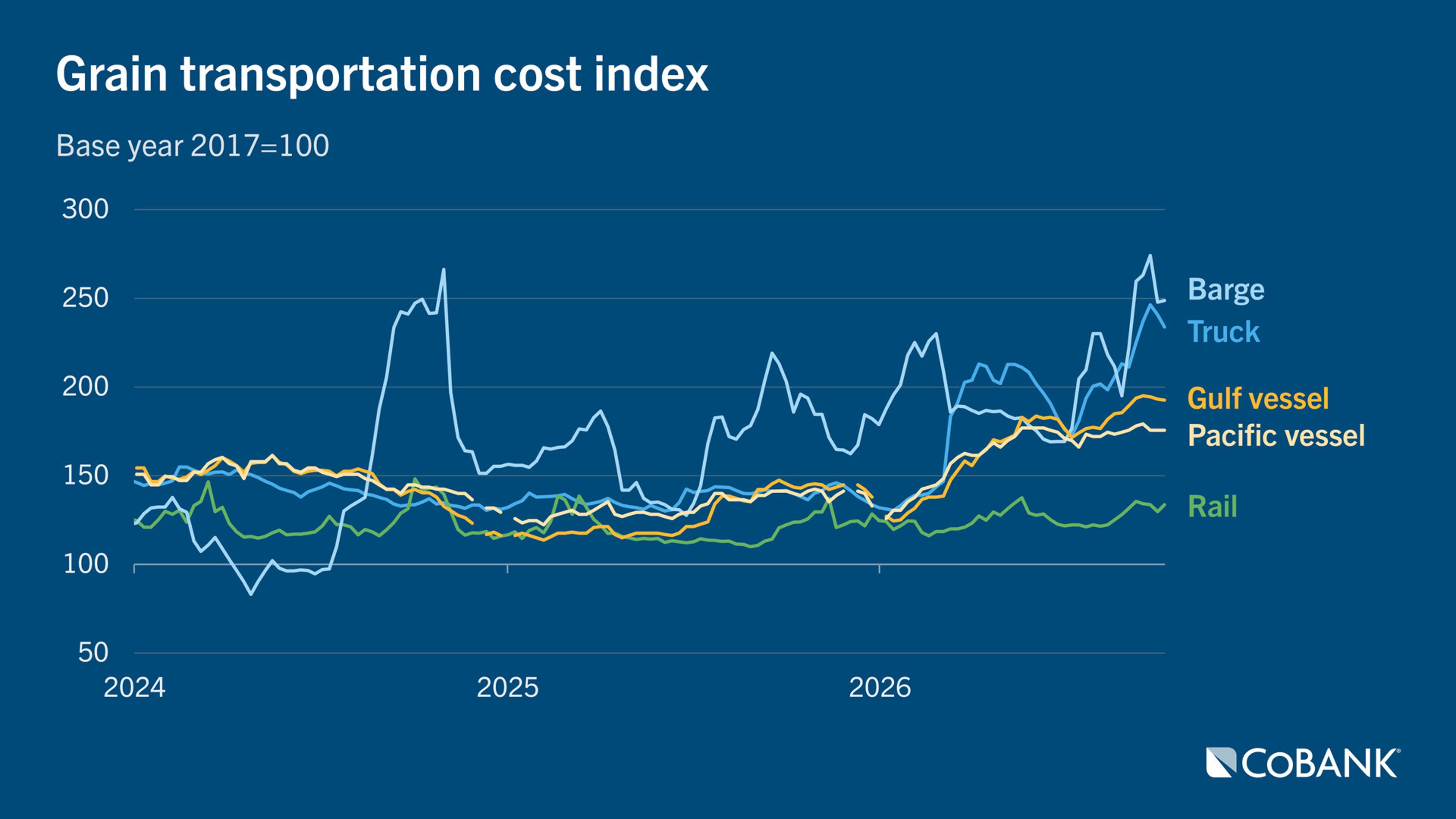
For grain merchandisers, the implications are clear. Transportation costs must be incorporated into basis decisions, liquidity planning and grain marketing strategies. Companies may also need to secure freight capacity earlier than normal to ensure inventories can be moved efficiently.
Conclusion
Grain merchandisers face a challenging operating environment characterized by large ownership positions, elevated carrying costs and rising transportation expenses. Heavy farmer selling has shifted inventory ownership to elevators, increasing both financing requirements and margin-call exposure. At the same time, higher grain prices and interest rates are raising the cost of holding inventory, while transportation and fuel expenses threaten merchandising margins and local basis levels.
As a result, grain companies should expect borrowing requirements to increase earlier in the marketing year and remain elevated longer than normal. Grain companies should prepare for larger working capital requirements, potentially wider basis levels and increased market volatility. Lenders should likewise evaluate borrowers' ability to withstand large margin calls, finance expensive inventories and accommodate higher transportation costs. In an environment where uncertainty remains elevated, maintaining adequate liquidity may be the most important risk-management tool available.
Disclaimer: The information provided in this report is not intended to be investment, tax, or legal advice and should not be relied upon by recipients for such purposes. The information contained in this report has been compiled from what CoBank regards as reliable sources. However, CoBank does not make any representation or warranty regarding the content, and disclaims any responsibility for the information, materials, third-party opinions, and data included in this report. In no event will CoBank be liable for any decision made or actions taken by any person or persons relying on the information contained in this report.