
Sugar demand holds steady, but health trends signal longer-term risk


Key points
- U.S. sugar deliveries have held surprisingly strong to date as use of highly processed sweeteners like high-fructose corn syrup declines.
- The potential for natural sweeteners seems as strong as ever, considering the general sentiment against artificial and processed alternatives.
- Consumers have long said they want to avoid added sweeteners, whether natural or artificial, yet their behavior has yet to manifest in a real behavioral shift.
- However, stable levels of sugar consumption in recent years should not lead to overconfidence in continued consumer behavior.
- GLP-1 drugs and health-oriented movements cast warning signals to sweetener brands, growers and manufacturers alike.
The U.S. consumer's relationship with sugar remains full of contradictions: Most say they want to consume less, yet sugar demand continues to grow.
While concerns about sugar consumption dominate headlines, rising USDA delivery data suggest demand for cane and beet sugar remains firmly intact. Sugar deliveries shipped by processors, refiners and importers are one of the best real-time indicators of domestic sweetener demand as they measure shipments into food, beverage, retail and distribution channels. During the first half of the 2025/26 marketing year (October–March), combined cane and beet sugar deliveries climbed to 6.079 million short tons, raw value (STRV), up 0.6% YoY.
However, high-fructose corn syrup (HFCS) deliveries dropped 3.5% over the same period. While both serve similar functions in food and beverage products, food manufacturers and consumers continue to favor natural sweeteners over more highly processed alternatives, as sugar and HFCS delivery trend lines make clear.
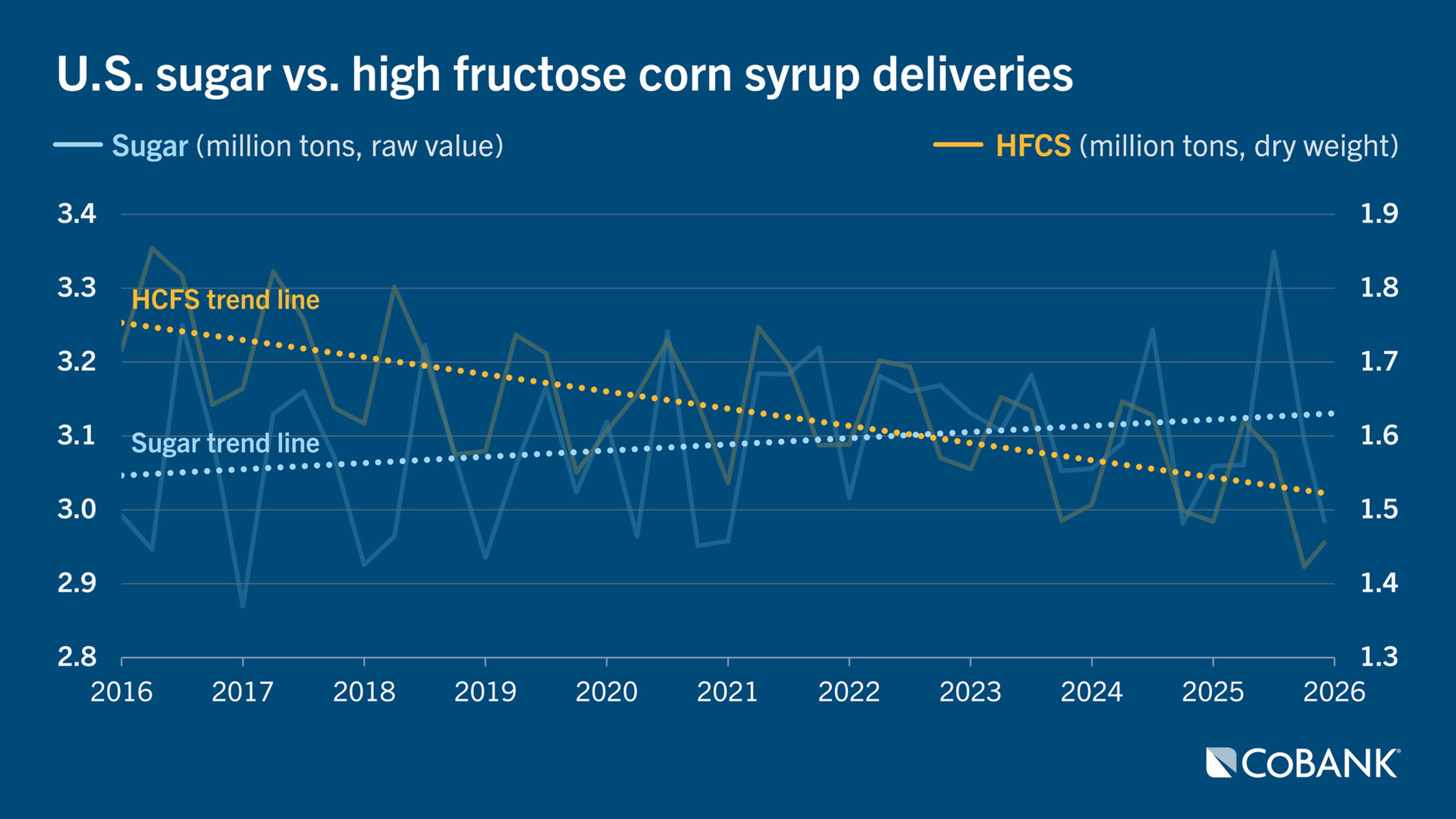
The growth in sugar deliveries isn’t temporary. Rather, the demand growth has been broad-based and building over the past several years.
According to the USDA Farm Service Agency’s sweetener market delivery data through April, deliveries to wholesale grocers, jobbers and dealers have been particularly strong, followed by all other deliveries, beverages, and bakery and cereal products. One possible explanation is the continued strength of in-store bakery departments for wholesale grocers. According to Circana, perimeter bakery unit sales increased 0.7% over the past year through May, supported by growth in desserts and sweet baked goods (+1.2%) and morning bakery products (+3.5%). Categories such as cakes, pastries, muffins, brownies and snack bars have posted especially strong gains.
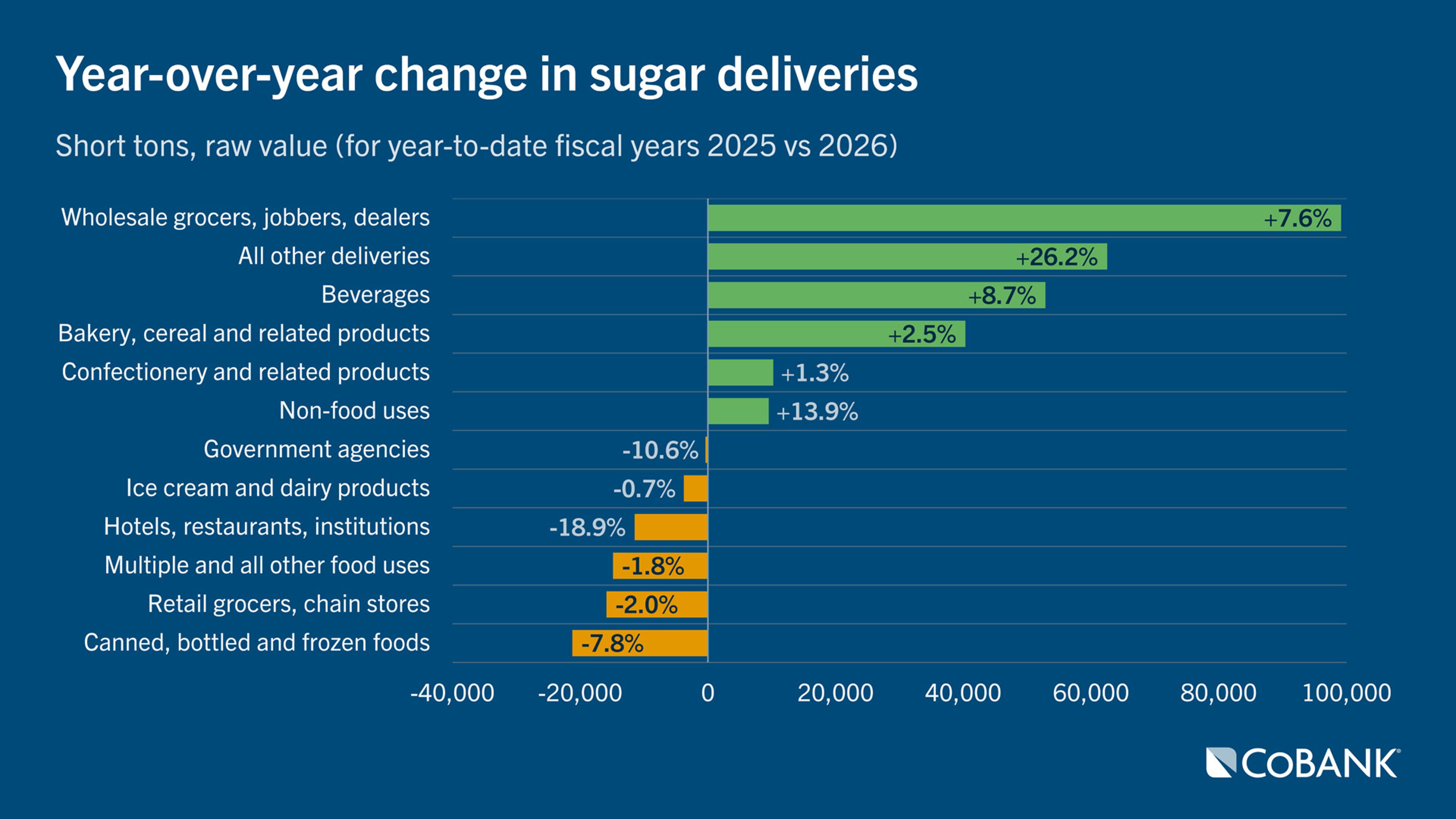
Consumers may be seeking affordable indulgences while avoiding the time, cost, and waste associated with baking at home. Purchasing prepared baked goods from grocery stores provides convenience and portion control while reducing the risk of unused ingredients or excess product.
Not every category is expanding, though. Sugar deliveries to government agencies, dairy and ice cream manufacturers, hotels and restaurants, retail grocery chains, and canned or frozen food processors fell from year-ago levels. The gains in beverages, bakery products and wholesale channels, though, have more than offset those weaknesses.
The gap between consumer intentions and behavior
The strength in U.S. sugar consumer demand bears explanation. Consumer surveys consistently report Americans want to reduce their sugar consumption. Three out of four consumers in 2025 reported trying to either limit (61%) or avoid (14%) sugar, according to the International Food Information Council.
However, these attitudes have not translated into substantial reductions in sugar consumption. Sugar remains relatively affordable, widely available, and deeply embedded across food and beverage categories. Consumers continue to purchase sweetened products even as they express concerns about sugar intake.
Importantly, consumers who want less sugar are not automatically turning to low- or no-calorie sweeteners, whether artificial such as sucralose and aspartame, or natural, such as stevia leaf extract. While perceptions of these alternatives have improved since 2017, more consumers still view them negatively than positively. Rather than switch to artificial sweeteners, IFIC research found that consumers seeking to reduce sugar intake are more likely to drink water, reduce overall food and beverage consumption or eliminate certain products entirely.
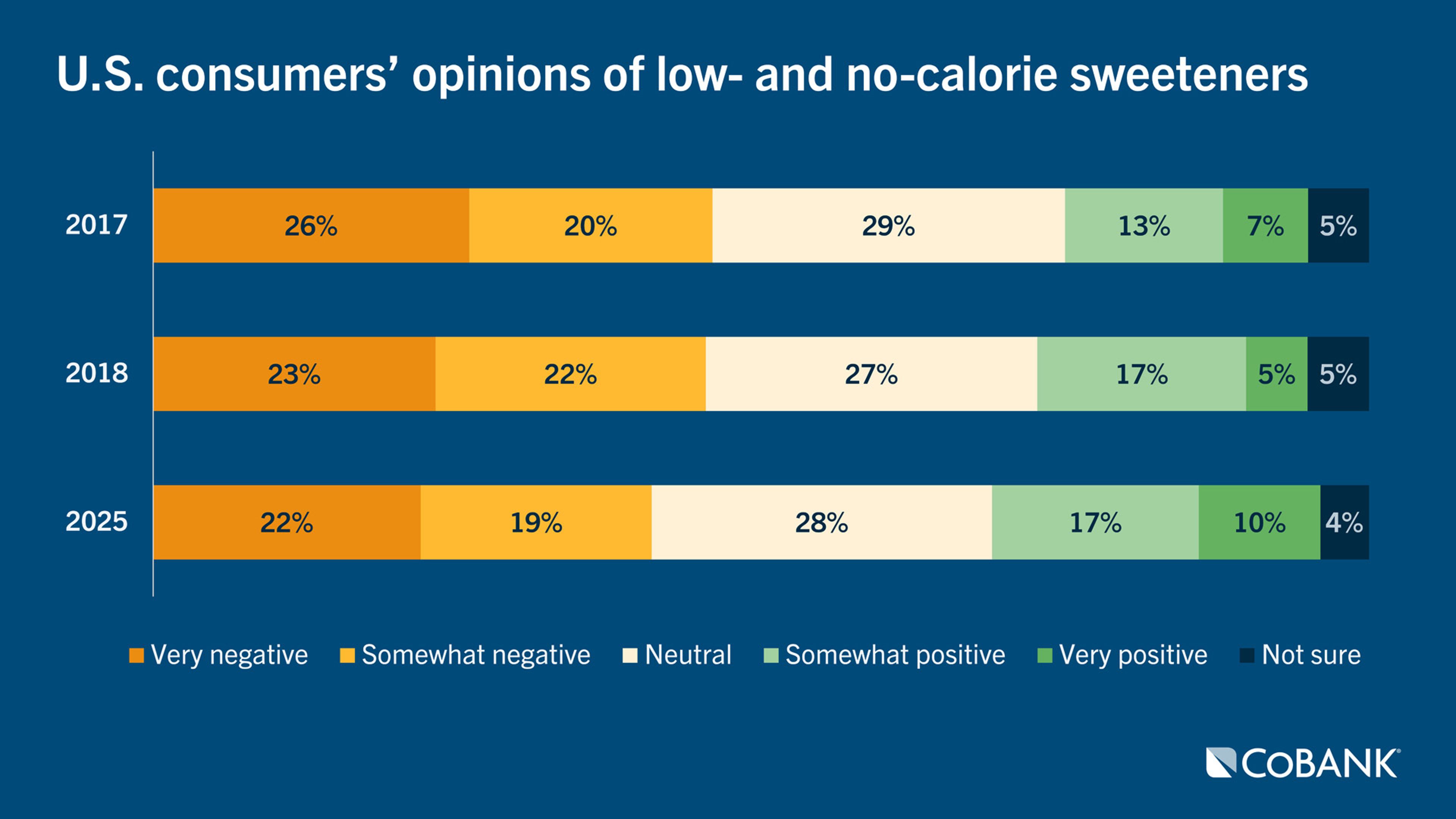
This distinction matters for the sweetener industry. Health-conscious consumers may reject both sugar and artificial alternatives rather than choosing one over the other. As a result, opposition to artificial ingredients does not necessarily translate into rapid growth for sugar demand. Instead, it tends to support demand for natural sweeteners such as stevia relative to artificial options.
For now, consumers continue buying and consuming sweetened products. Confectionery, bakery, beverage and snack manufacturers are reformulating products to satisfy what consumers say they want. One of the more infamous examples of late has been Reese’s Peanut Butter Cups from Hershey. The company reformulated to reduce sugar and was called out on social media by the developer’s grandson. Even categories facing broader challenges, such as carbonated soft drinks, continue to generate sales growth through portion-size innovations and premium offerings.
At the same time, artificial sweeteners aren’t exactly going away. The market for artificial sweeteners has grown by roughly 2.1 million kilograms, or 2,315 tons, since 2018. However, projected growth through 2030 implies only a modest compound annual growth rate of about 1.4%.
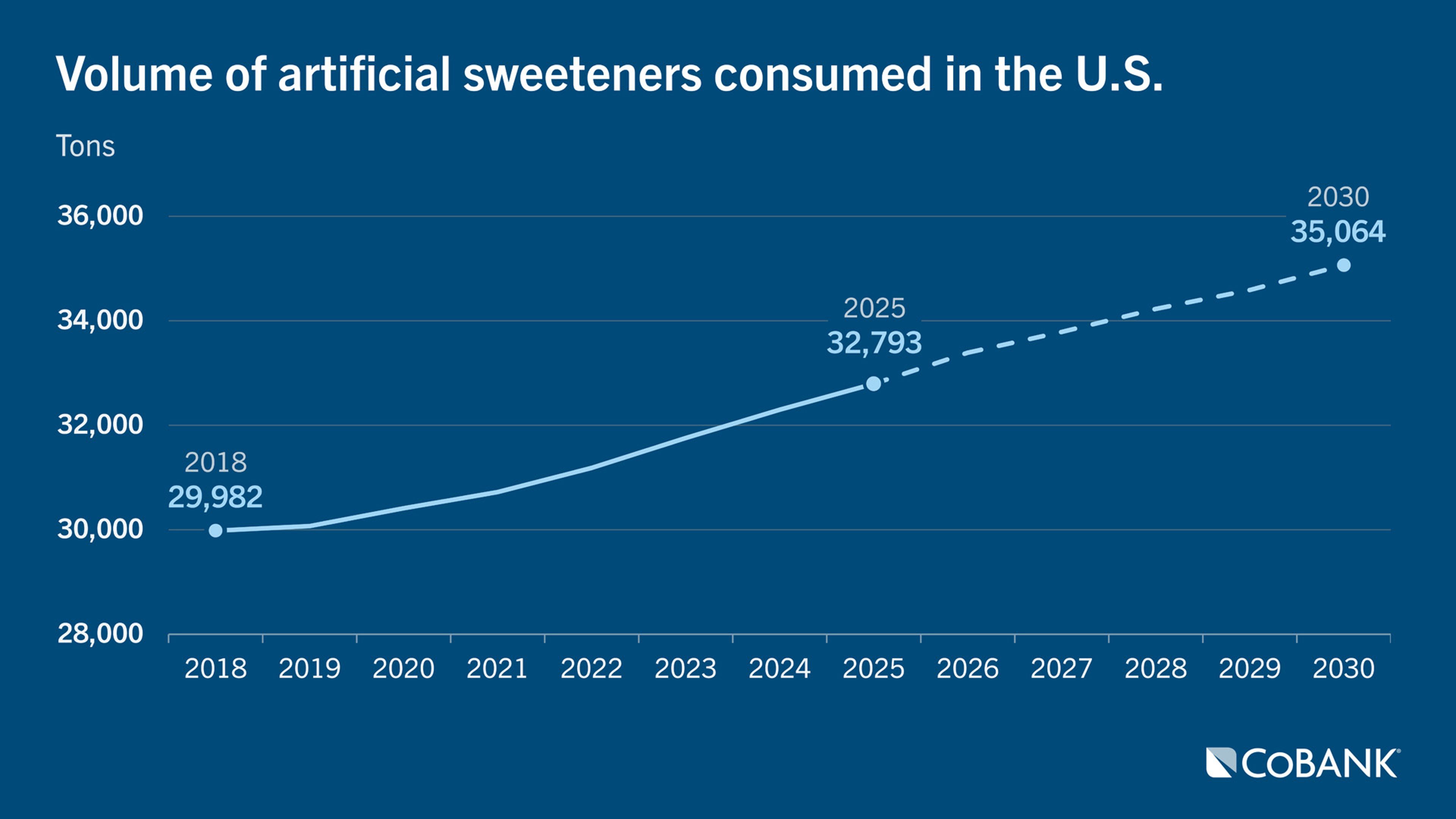
Natural sweeteners appear to have stronger long-term momentum. Future Market Insights projects the U.S. stevia market will expand at a 5.6% annual rate through 2036 as manufacturers increasingly incorporate stevia into dairy products, baked goods, sauces and other applications beyond traditional beverage uses.
These trends suggest that consumers are not simply replacing sugar with artificial sweeteners. Instead, many are gravitating toward products perceived as more natural.
Emerging headwinds from MAHA and GLP-1
The near-term outlook for sugar demand remains reasonably positive, but longer-term risks are growing. Health-focused initiatives, including the Make America Healthy Again movement, have amplified concerns about added sugars and artificial sweeteners. While these efforts have not materially reduced consumption to date, they contribute to growing consumer awareness around nutrition and ingredient choices.
A more significant challenge comes from the rapid adoption of GLP-1 weight-loss medications.
GLP-1 drugs directly reduce appetite and food consumption, indeed reportedly altering consumer brain chemistry. Their impact extends across virtually all food and beverage categories, including sweetened products. J.P. Morgan estimates that GLP-1 use could reduce annual U.S. food and beverage spending by $30 billion by 2030, growing to $55 billion by 2034. Some projections suggest grocery basket sizes could decline by as much as 31% among active users.
Sweetened foods and beverages are unlikely to be uniquely affected, but they will still face lower demand if consumers generally eat less. Products perceived as indulgent may be particularly vulnerable among users who associate weight management with reducing sugar intake.
The potential impact could accelerate after 2031, when key semaglutide patents expire in the United States. Generic competition would likely reduce treatment costs significantly and expand access to a broader consumer base, increasing the number of people using these medications.
Conclusion
U.S. sugar demand has proven more resilient than many expected. Rising sugar deliveries, stable consumption levels, and declining HFCS use all point to continued consumer preference for natural sweeteners. While many consumers express a desire to reduce sugar intake, actual purchasing behavior has changed little, supporting near-term demand.
Over the longer term, however, the industry faces meaningful challenges. Health-oriented consumption trends, growing demand for alternative sweeteners and especially the expansion of GLP-1 medications could limit growth across food and beverage categories. For sugar producers, refiners, and food manufacturers, the key question is no longer whether demand remains stable today, but how consumer behavior may evolve over the next decade.
Disclaimer: The information provided in this report is not intended to be investment, tax, or legal advice and should not be relied upon by recipients for such purposes. The information contained in this report has been compiled from what CoBank regards as reliable sources. However, CoBank does not make any representation or warranty regarding the content, and disclaims any responsibility for the information, materials, third-party opinions, and data included in this report. In no event will CoBank be liable for any decision made or actions taken by any person or persons relying on the information contained in this report.