
Prices pressures weigh on consumers, brands and retailers

Key points
- Food costs will increase 3% throughout 2026, with another 2.4% expected in 2027.
- Elevated input costs continue to weigh on consumer packaged goods brands as margins shrink further.
- Consumers have adopted a “get more for less” approach, stretching their food dollar through sales, promotions and discount retailers.
Food inflation remains a central pressure point for packaged food companies, driven by elevated costs for energy, fertilizer, raw materials, packaging and tariffs. Conagra, Campbell’s, McCormick and Clorox, which owns Hidden Valley Ranch, plan targeted price increases in the second half of this year, while Kraft Heinz is trying to absorb most inflationary costs but has indicated it may match category-wide price increases if market pressure broadens.
According to the USDA’s Economic Research Service, the average food bill will climb at least 3% through 2026 and another 2.4% in 2027. Yet that year-over-year increase masks the cumulative effect of higher prices. Overall food prices may have risen only 3% in the past year, but they have jumped 30% since January 2020.
Consumers prioritize value as grocery costs climb
Retailers and consumers are responding defensively. Kroger’s turnaround efforts have helped it maintain its shopper base, but its growth has come primarily from the upper end of an increasingly K-shaped economy. The retailer says it added more than 1 million high-income households in the past year while losing 700,000 lower-income households and is seeing reduced spending among the lower-income customers who remained. As a result, Kroger says customers shifted more than $12 billion in CPG spending to Amazon, Walmart and Costco over the past year. These and other retailers are working to keep price increases in check, while households shift to private label products, smaller packages and lower-priced stores such as Aldi and Lidl. Aldi will capitalize on this focus on value by adding private-label refrigerated prepared meals, launching them regionally in October and nationally by January 2027.
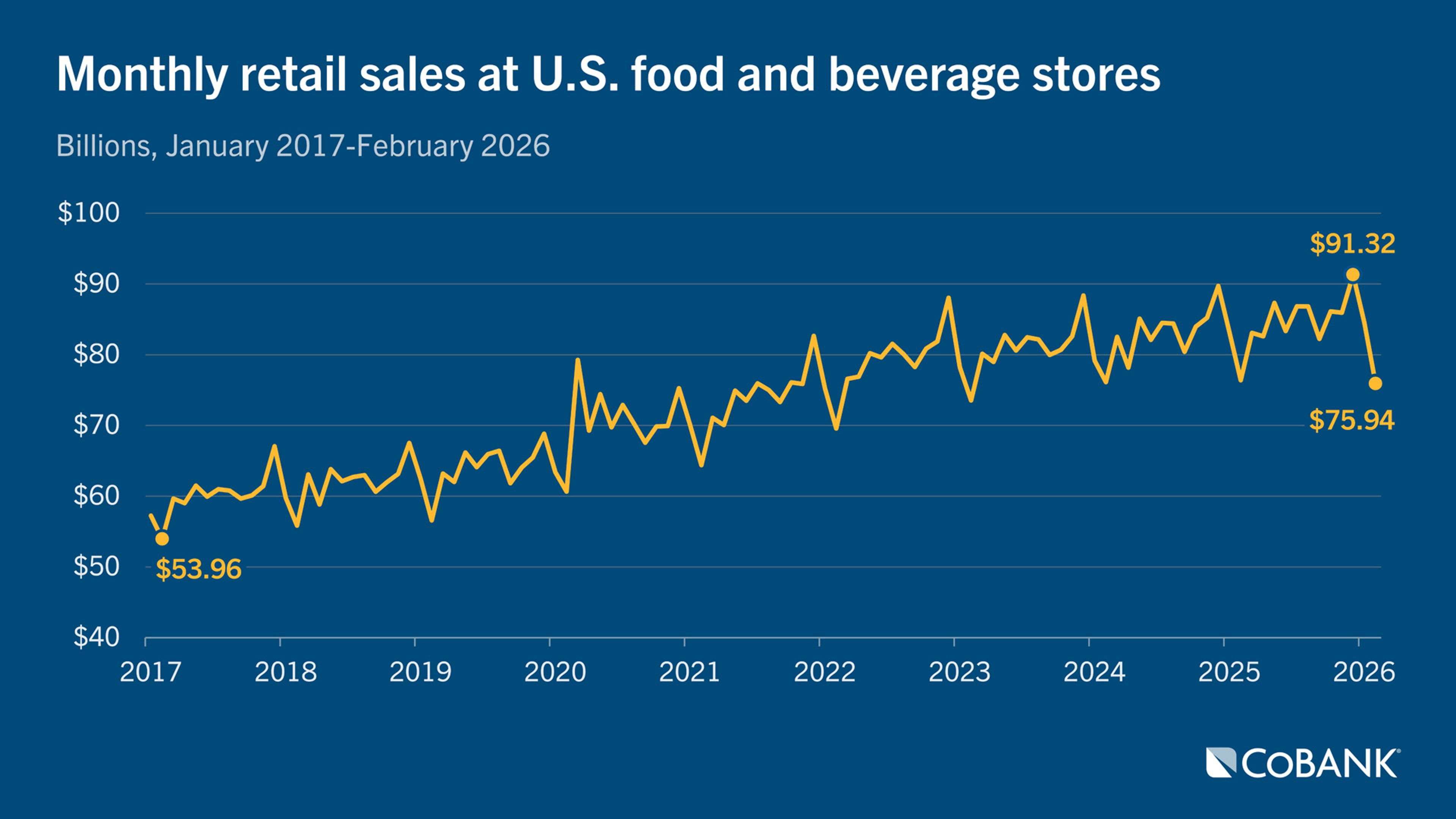
Notable shifts in consumer spending behavior amid recent bouts of heightened inflation have benefitted private-label offerings, whose sales are on track for a record for the third consecutive year, according to the Private Label Manufacturers Association. As a result, national brands and retailers are noting a distinct drop in unit sales. However, even as consumers have shifted much of their food spending to grocery stores for meals prepared at home, monthly food and beverage sales at grocery stores have not risen dramatically and, in fact, registered a notable dip in early 2026.
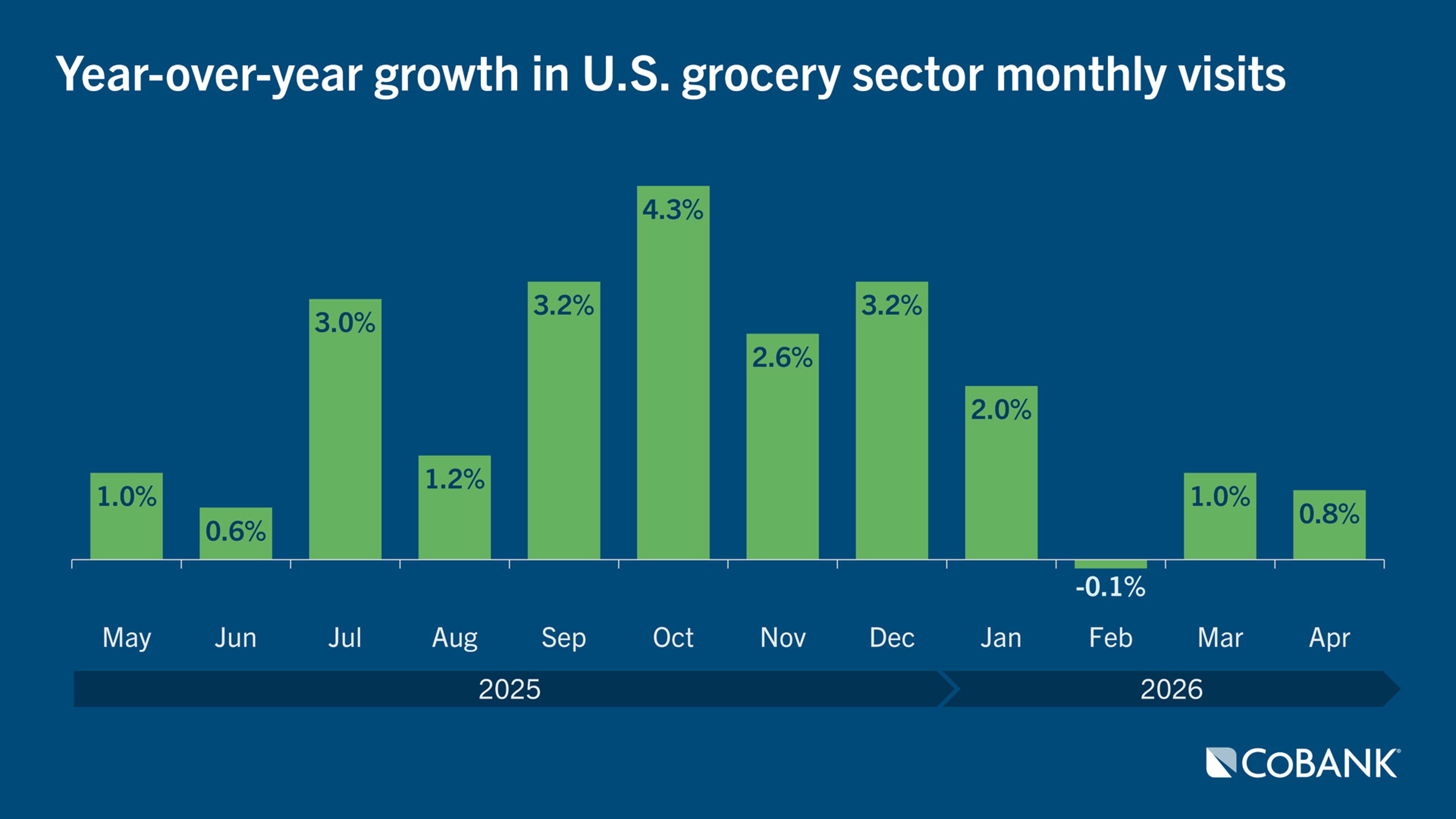
Furthermore, monthly grocery stores visits have steadily increased for more than a year, even as those total sales have remained largely consistent. The problem for national brands is that consumers are focusing on value, a shift that shows no signs of abating.
Food brands rethink pricing, packaging and portfolios
Campbell’s management has warned of another difficult year in fiscal 2027, projecting lower net sales and adjusted earnings per share. Efforts to rebuild the company’s margins hinge on innovation in Goldfish and Snyder’s, productivity and pricing improvements and cost savings. Other major food companies are emphasizing value amid heightened inflation, supported where possible by innovation and smaller package sizes to respond to changing consumption patterns. General Mills has reported improvement after lowering base prices; Mondelēz is preparing a broad Oreo relaunch for 2027; Nestlé is pruning its portfolio; and PepsiCo is pushing deeper into fresh, refrigerated and meal-adjacent categories as shoppers seek healthier, less processed options and GLP-1 drugs potentially reshape snack demand.
PepsiCo has likewise determined that lower prices will not necessarily increase volumes. In February, the company cut prices by as much as 15% to revive demand. In its most recent quarterly earnings report, PepsiCo reported a 2% revenue decline and flat volumes, and reports now indicate the company will raise prices later in 2026 or early 2027 on grocery-store packages of chips and dips, as well as carbonated soft drinks. The increases are expected to be in the low- to mid-single-digit range.
Retail brands are firmly in a reactive mode because reduced unit sales and limited pricing flexibility leave them few options. Supply chain costs will likely continue rising through the second half of the year, with fuel costs alone poised to significantly reduce margins. Consumers face the same fuel cost increases and will continue prioritizing value and lower prices in their food and beverage purchases whenever possible. One positive for retailers and brands is that consumers will likely continue shifting toward food prepared at home.
Disclaimer: The information provided in this report is not intended to be investment, tax, or legal advice and should not be relied upon by recipients for such purposes. The information contained in this report has been compiled from what CoBank regards as reliable sources. However, CoBank does not make any representation or warranty regarding the content, and disclaims any responsibility for the information, materials, third-party opinions, and data included in this report. In no event will CoBank be liable for any decision made or actions taken by any person or persons relying on the information contained in this report.