
Strong beef prices are driving expansion in dairy cow numbers

Key points
- Driven by strong returns for newborn beef-on-dairy calves, the U.S. dairy cow herd has grown by 319,000 head in the past 20 months, pushing past 9.7 million.
- Texas, Idaho, Kansas, and South Dakota paced the herd expansion as U.S. dairy cow numbers moved to a 34-year high.
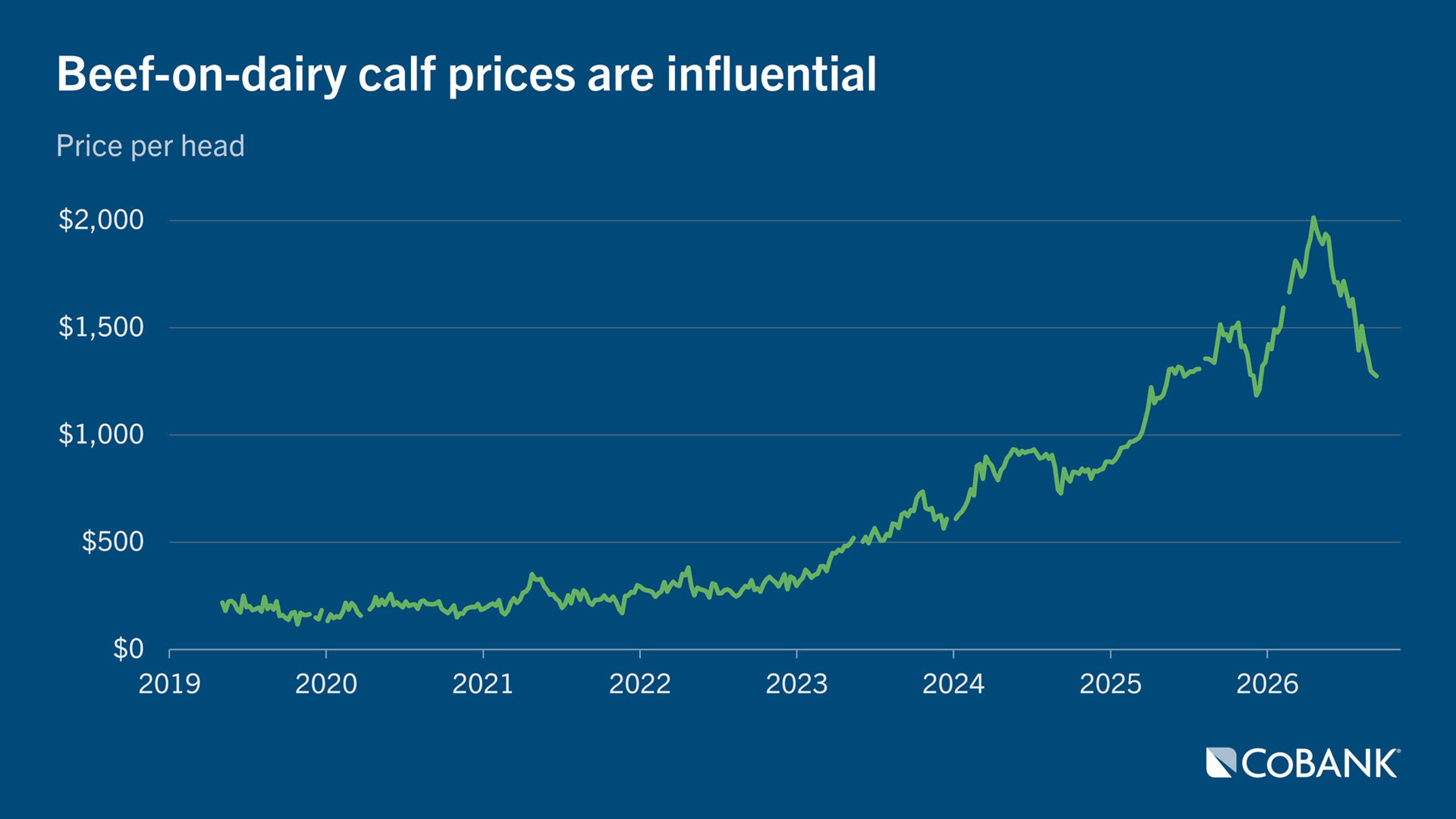
- While beef-on-dairy calves have dropped from a high of $2,000 in May, the current $1,300 per calf remains far higher than the $200 level that prevailed prior to 2023.
- The additional dairy cows and resulting milk supply have put downward pressure on milk-check revenue. As a result, beef revenue has become the profit center, while milk checks cover expenses.
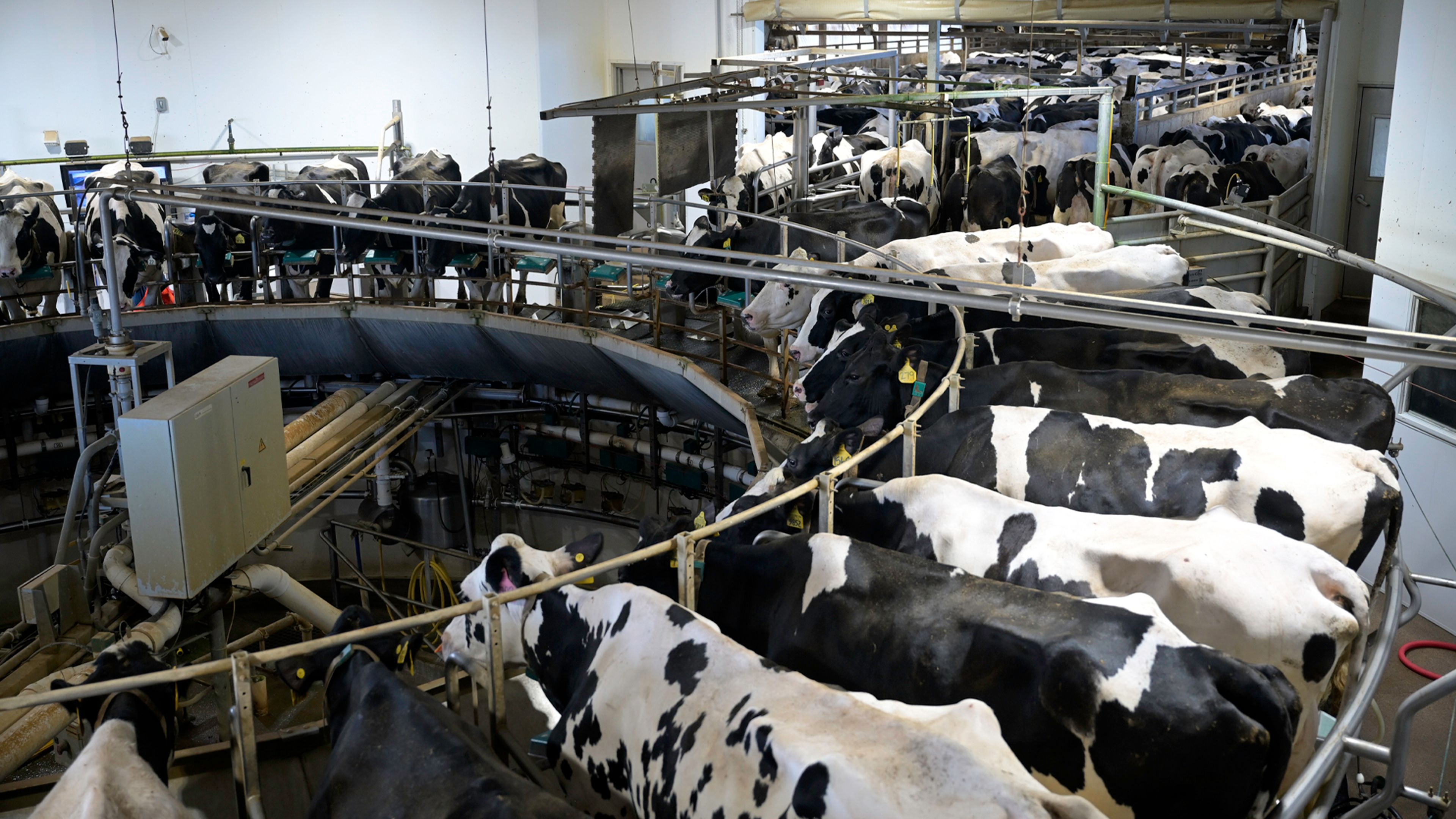
For generations, milk-check revenue has been the main driver of dairy herd profitability. For the first time in the modern-day dairy industry, that is no longer the case. Prior to the beef-on-dairy trend, milk checks often contributed 95% of dairy farm revenue with cull cows and calves destined for feedlots added another 5% to the cash flow ledger.
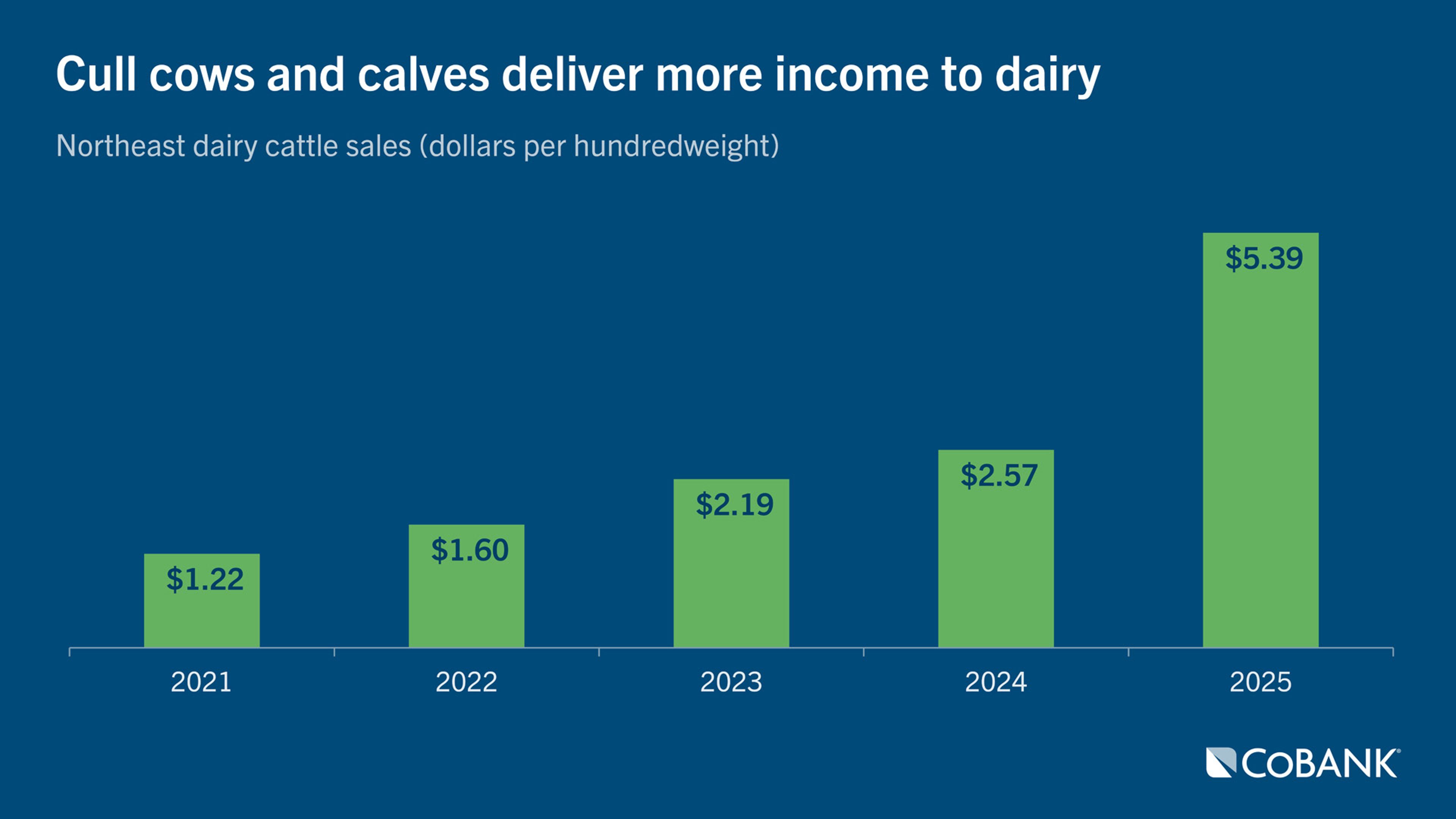
Everything began to change about five years ago. According to Farm Credit East data, cattle sales, including cull cows and calves, contributed $1.22 per hundredweight to Northeast dairy farm revenue in 2021. That contribution slowly grew to $2.57 per cwt. in 2024 and then leapt to $5.39 per cwt. in 2025. While those numbers may be among the highest in the country, financial data indicates the contribution is close to $4.50 per cwt. in Michigan and $4 per cwt. on the West Coast. In all instances, the trendlines mirror the data from Farm Credit East. As a result, cull cow and calf sales now account for nearly 20% of dairy farm revenue.
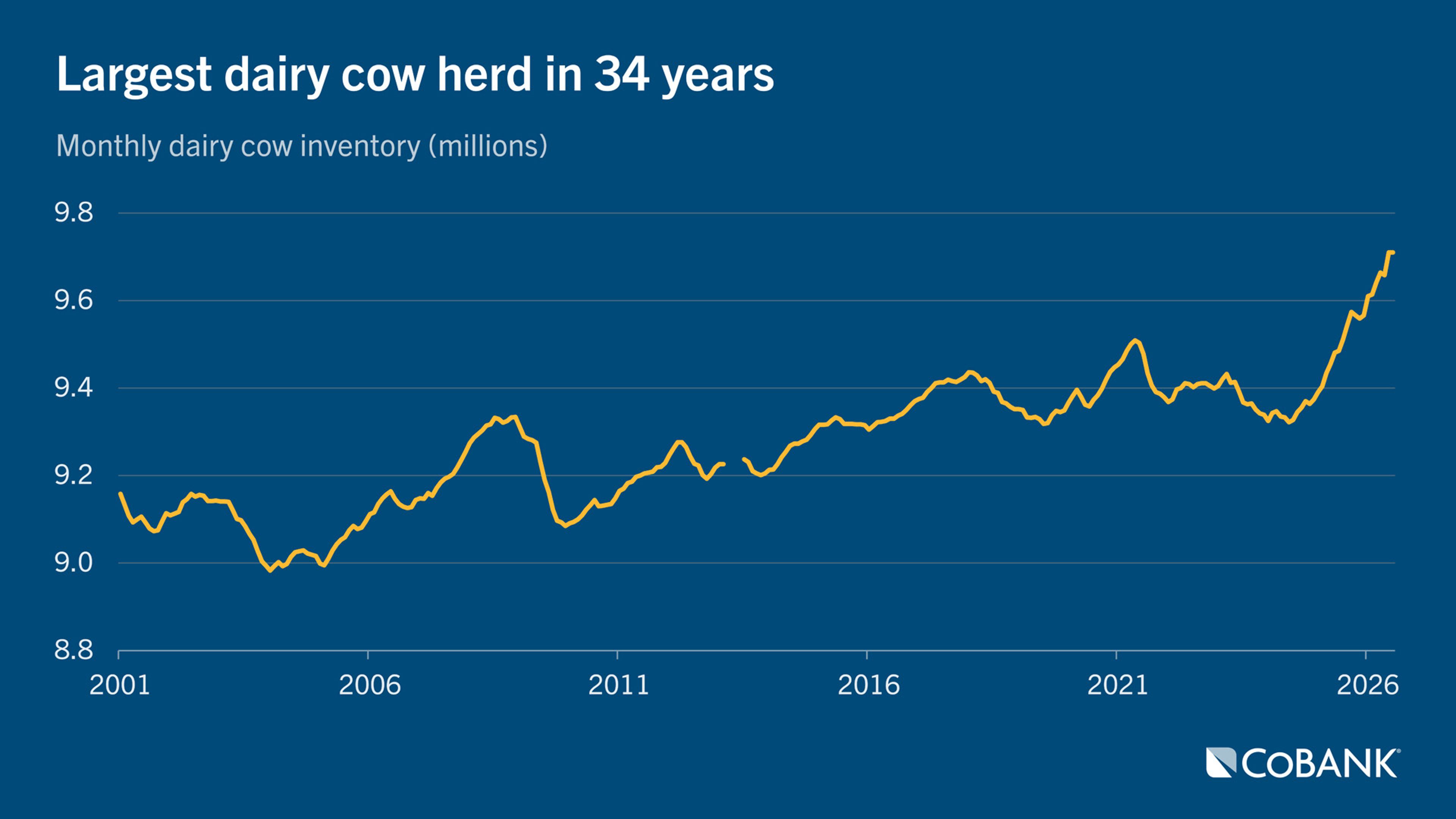
This market dynamic has caused a generational shift in dairy cow numbers. From 2020 to mid-year 2025, dairy cow numbers largely hovered between 9.3 million and 9.4 million head. That began to change when the U.S. herd surpassed 9.5 million head in July 2025 and reached 9.6 million head in January 2026. Fueled by strong returns from beef revenue, U.S. dairy cow numbers climbed to 9.7 million head by June 2026.
How large could the U.S. dairy herd grow? The U.S. dairy herd could climb to a previously unthinkable 10 million head. While that is a lofty number, beef demand is strong, beef cow numbers are at their lowest level since 1961, and the U.S. dairy processing sector has $14 billion in new assets coming online through 2028. Those would be three significant drivers that could lead to a 10 million-cow U.S. dairy herd. Certainly, downward pressure on milk check revenue would be a reason cow numbers could plateau.
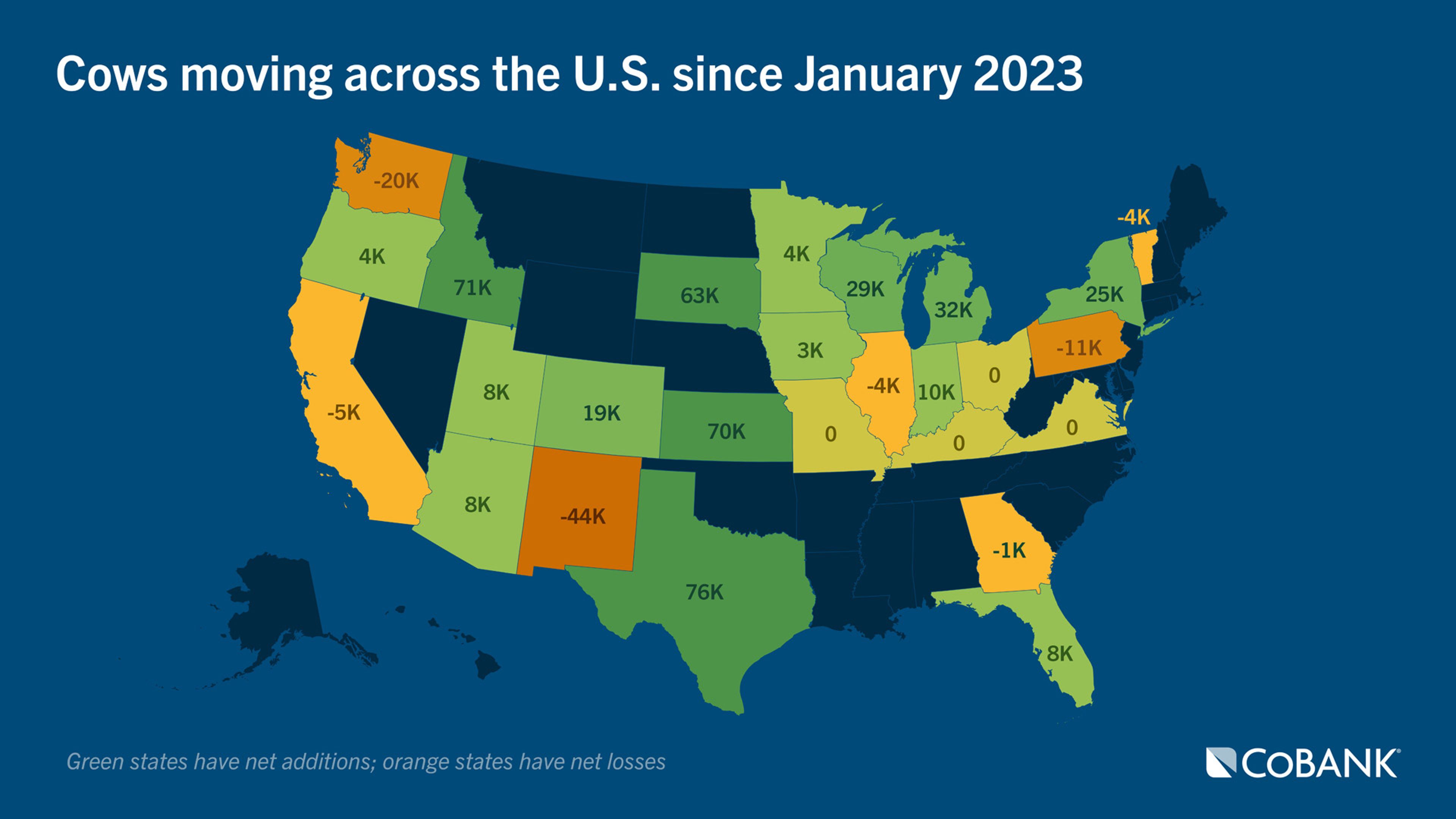
Over the long term, investment in dairy plants has largely driven growth in dairy cow numbers in different regions. Dairy cow numbers in Texas and Kansas have climbed by 76,000 and 70,000 head, respectively, since January 2023. Both states benefited from new processing capacity, with new plants expected to process upwards of 10 million pounds per day in each state. Additional capacity in the I-29 corridor caused South Dakota dairy producers to add 63,000 cows in the past three and a half years.
Planned plant expansions largely account for the additional growth in dairy cow numbers. Investments include up to $2.8 billion in New York; $1.5 billion in Texas; $1.3 billion in Michigan; $1.1 billion in Wisconsin; and $720 million in Idaho. It’s no coincidence that these states rank among the top seven in dairy cow additions.
In September, Chobani announced it would develop a $1.2 billion plant near Allentown, Pennsylvania. Until then, Pennsylvania’s dairy cow numbers had been declining. As that plant comes online in 2027, that trend is expected to reverse, putting the state’s dairy herd on a growth path.
While new plant expansions have been driving growth in dairy cow numbers, record or near-record prices for beef-on-dairy calves have caused dairy farmers in most states to keep more dairy cows. Prior to 2023, a newborn calf rarely fetched over $200. However, as beef supplies became limited due to a shrinking beef herd, dairy farmers began using beef semen on up to 70% of the dairy herd to capitalize on beef markets and using sex-sorted semen to produce dairy heifer calves for herd replacements. By 2025, dairy farmers purchased 8.1 million of the 9.8 million units of A.I. beef semen, according to National Association of Animal Breeders data. Beef-on-dairy calf prices drove that increase, climbing 50% from $800 in 2024 to $1,200 in 2025. This year, calf prices peaked at $2,000 and have since fallen back to $1,300. However, those prices still represent a significant profit margin for dairy producers.
While milk production only twice posted year-over-year gains of more than 1% during 2023 and 2024, the trend changed as plant expansions increased demand for milk and strong beef-on-dairy calf prices sent signals to retain more dairy cows. That growing dairy cow herd pushed monthly milk production gains to the 2% to 3% range with three months even posting gains higher than 4% from 2025 to 2026.
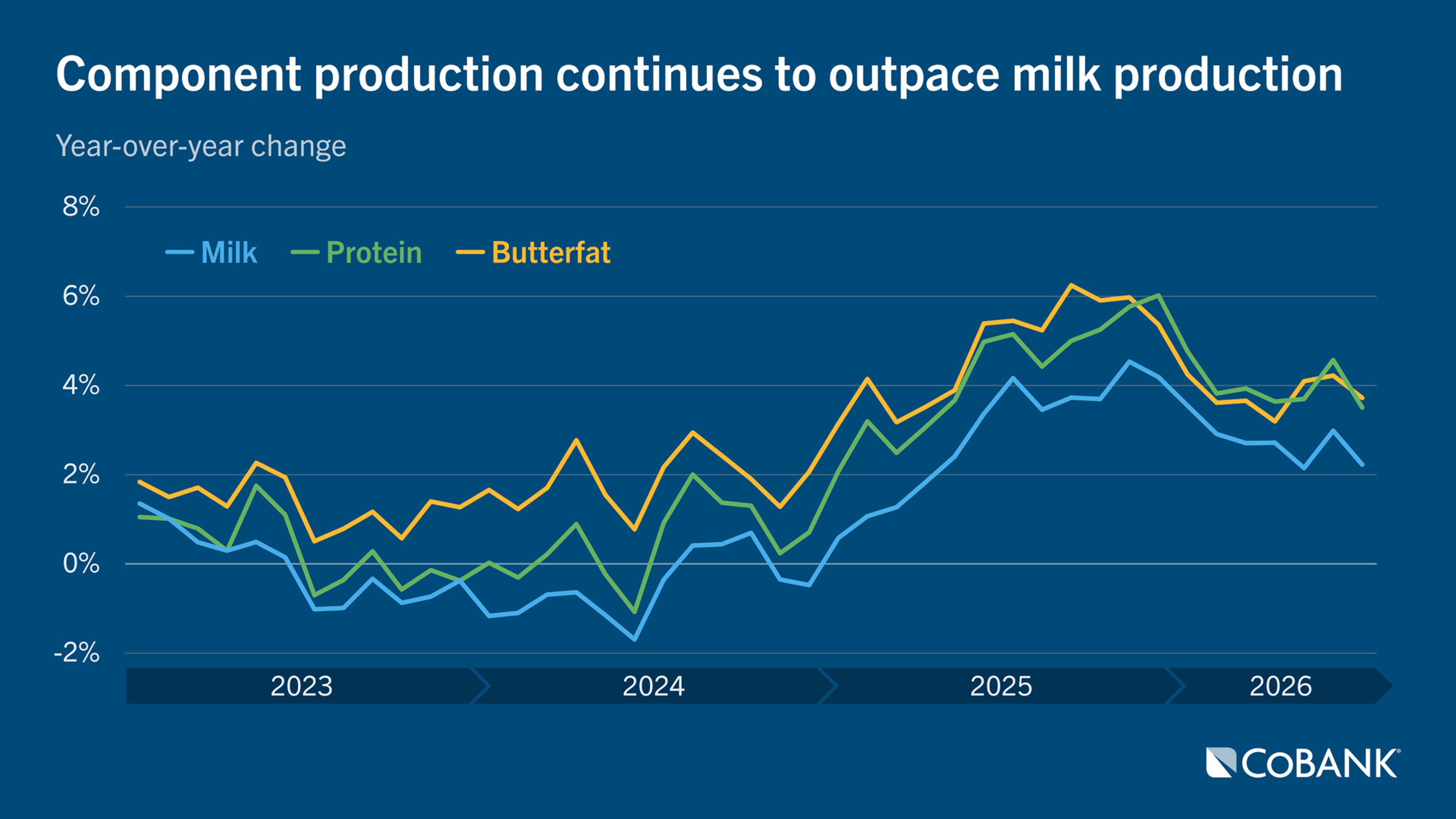
On the production side, rising butterfat and protein levels have been a game-changing story. The more nutrient-dense milk composition caused butterfat and protein production, measured in pounds, to grow by 3% to 5% during the past 19 months. On one occasion, butterfat and protein posted a 6% gain during that time.
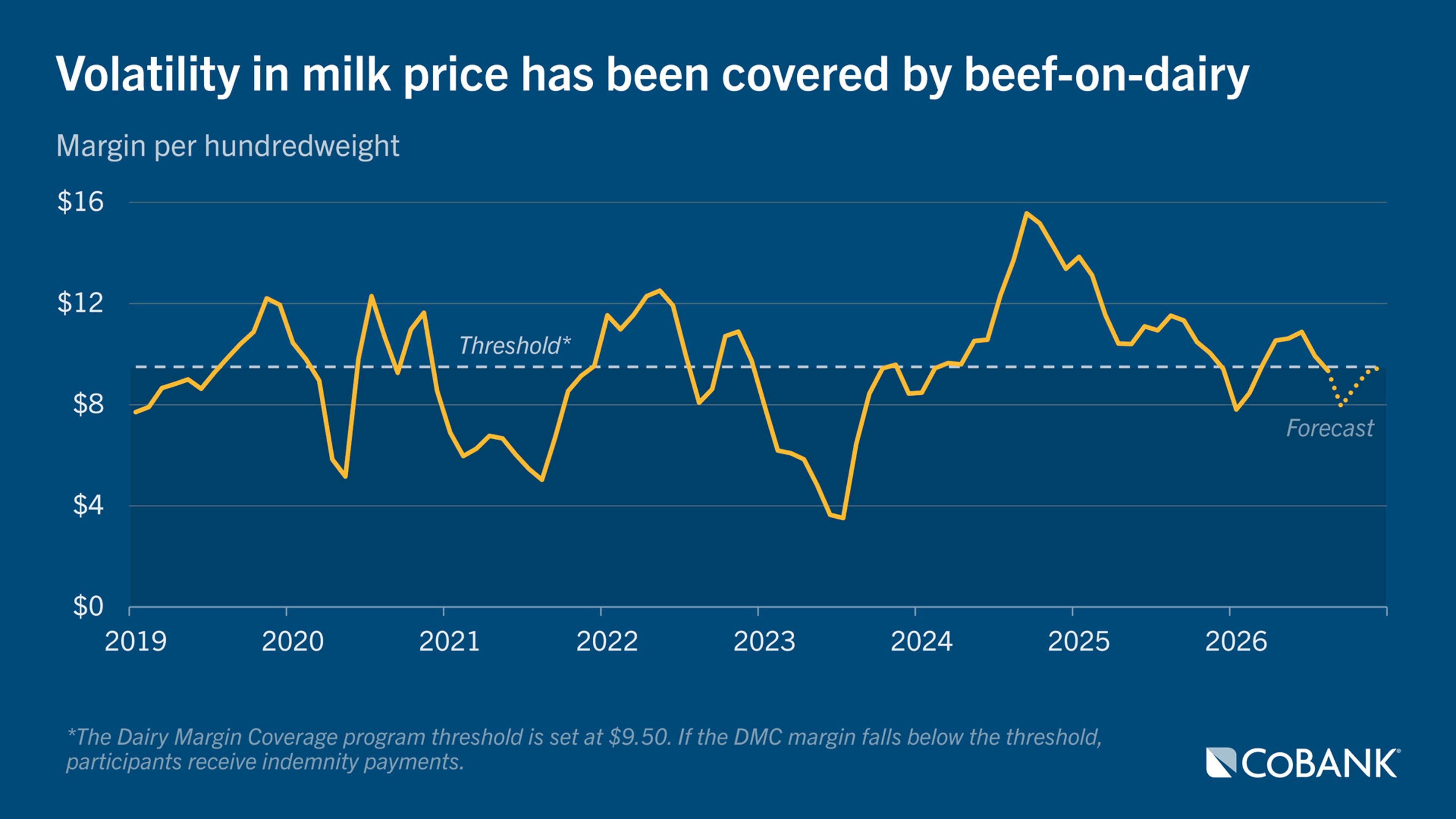
While milk-production margins were strong in portions of 2024 and 2025, profitability has waned with dairy farmers barely breaking even after milk sales. Strong butterfat production has put downward pressure on milk prices. However, an additional $3 to $5 per cwt. from beef sales allows dairy farmers to continue posting positive margins.
Disclaimer: The information provided in this report is not intended to be investment, tax, or legal advice and should not be relied upon by recipients for such purposes. The information contained in this report has been compiled from what CoBank regards as reliable sources. However, CoBank does not make any representation or warranty regarding the content, and disclaims any responsibility for the information, materials, third-party opinions, and data included in this report. In no event will CoBank be liable for any decision made or actions taken by any person or persons relying on the information contained in this report.