
Surging electricity demand is bigger than just data centers

Key points
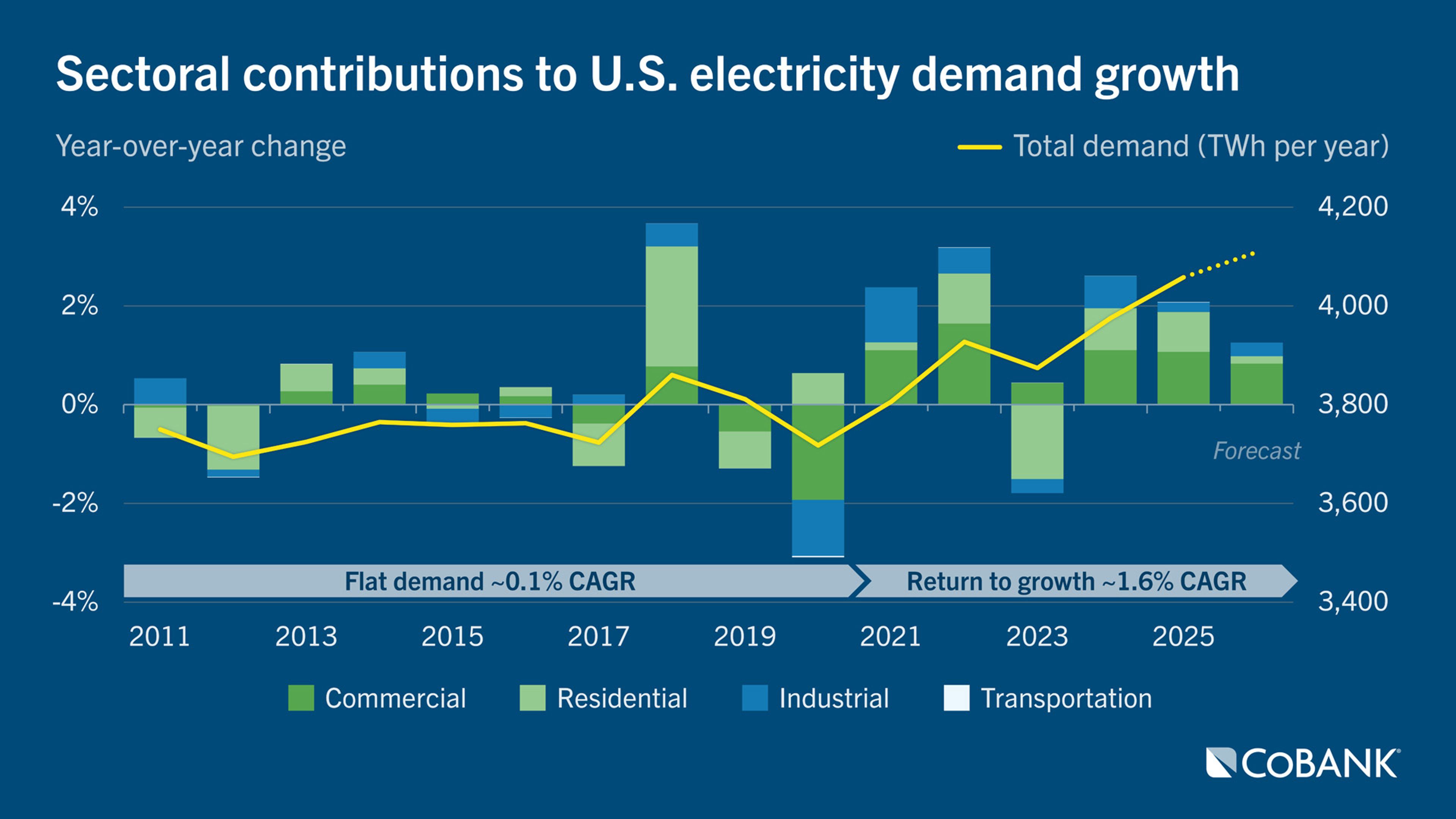
- U.S. electricity demand is growing again. Retail sales grew at a 1.6% annual rate between 2021 and 2025, reversing more than a decade of largely flat demand.
- Data centers are only part of the commercial surge. Commercial customers accounted for roughly 65% of demand growth, with logistics, EV charging, building electrification and health care adding load.
- Demand growth is broadening and raising stakes for utilities. Residential electrification, manufacturing investment and reshoring are creating new loads that will require greater grid investment.
After more than a decade of flat demand, the U.S. has entered a new era of electricity growth, but data centers tell only part of the story. Retail electricity sales rose at a 1.6% compound annual rate between 2021 and 2025 as commercial expansion, residential electrification and industrial investment pushed loads higher. Commercial demand, where data center load is typically billed, generated about 65% of that growth since 2021, while residential and industrial customers each contributed roughly 17%. And the grid is feeling it: In July and August 2026, ERCOT set multiple peak-demand records while PJM, MISO, SPP and other regions managed periods of exceptionally high load.
For utilities, this broad-based acceleration signals a fundamental shift in system planning and investment needs.
Commercial demand extends beyond data centers
The link between data center development and electricity demand is increasingly evident. Since 2021, the nation's five largest data center markets — Virginia, Texas, Georgia, Arizona and Ohio — have accounted for 50% of total commercial retail sales growth. Yet the commercial narrative extends beyond data centers. Public electric vehicle charging, building electrification, warehousing and logistics, and health care are also driving demand.
Since the COVID-19 pandemic, e-commerce growth, supply-chain restructuring and the rapid buildout of distribution networks have fueled unprecedented demand for warehouses and logistics facilities. According to CBRE, mega leases exceeding 1 million square feet more than doubled in the first half of 2026, while demand broadened beyond logistics providers to include food and beverage, retail, wholesale, and e-commerce occupiers. Further, the International Energy Agency forecasts that in the U.S. “the buildings sector excluding data centers will also remain a significant contributor to growth, largely due to rising consumption from space cooling and heat pumps.”
Home electrification reshapes residential demand
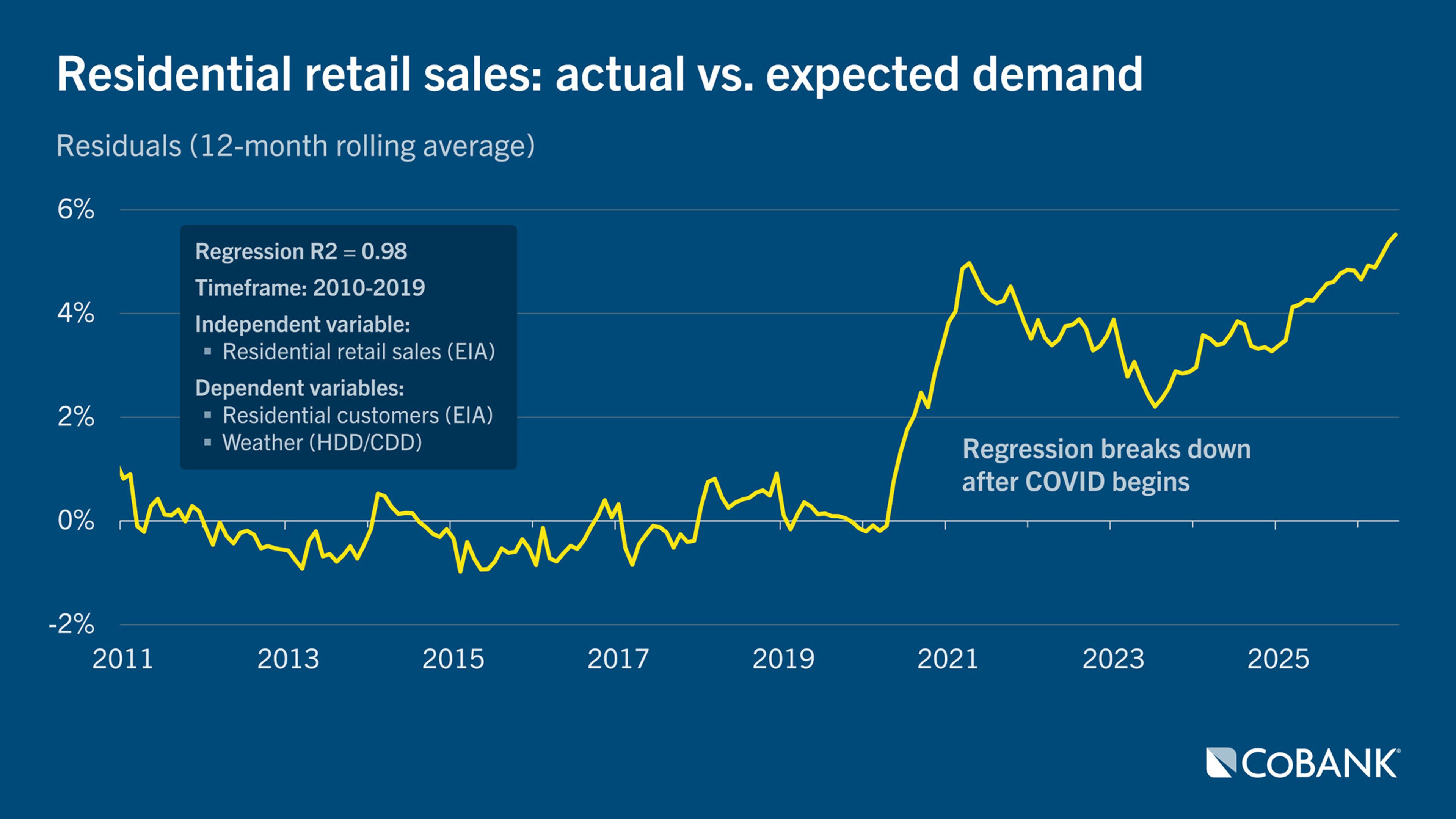
Historically, customer growth and weather have been overwhelmingly responsible for changes in residential electricity demand, explaining 98% of the variation in residential retail sales over time. More frequent and sustained periods of extreme heat and cold have increased electricity consumption, particularly during peak heating and cooling months.
However, customer growth and weather no longer fully explain residential demand. Following COVID, the gap between actual and expected demand widened significantly, likely reflecting increased time spent at home and the lasting effects of remote work. That gap widened again beginning in 2023, suggesting additional factors are influencing consumption. Growing electrification, including EV charging and heat pump adoption, likely contributes to this trend. U.S. heat pump shipments have surpassed gas furnace shipments since 2021 and continue to gain market share.
Industrial investment brings new load online
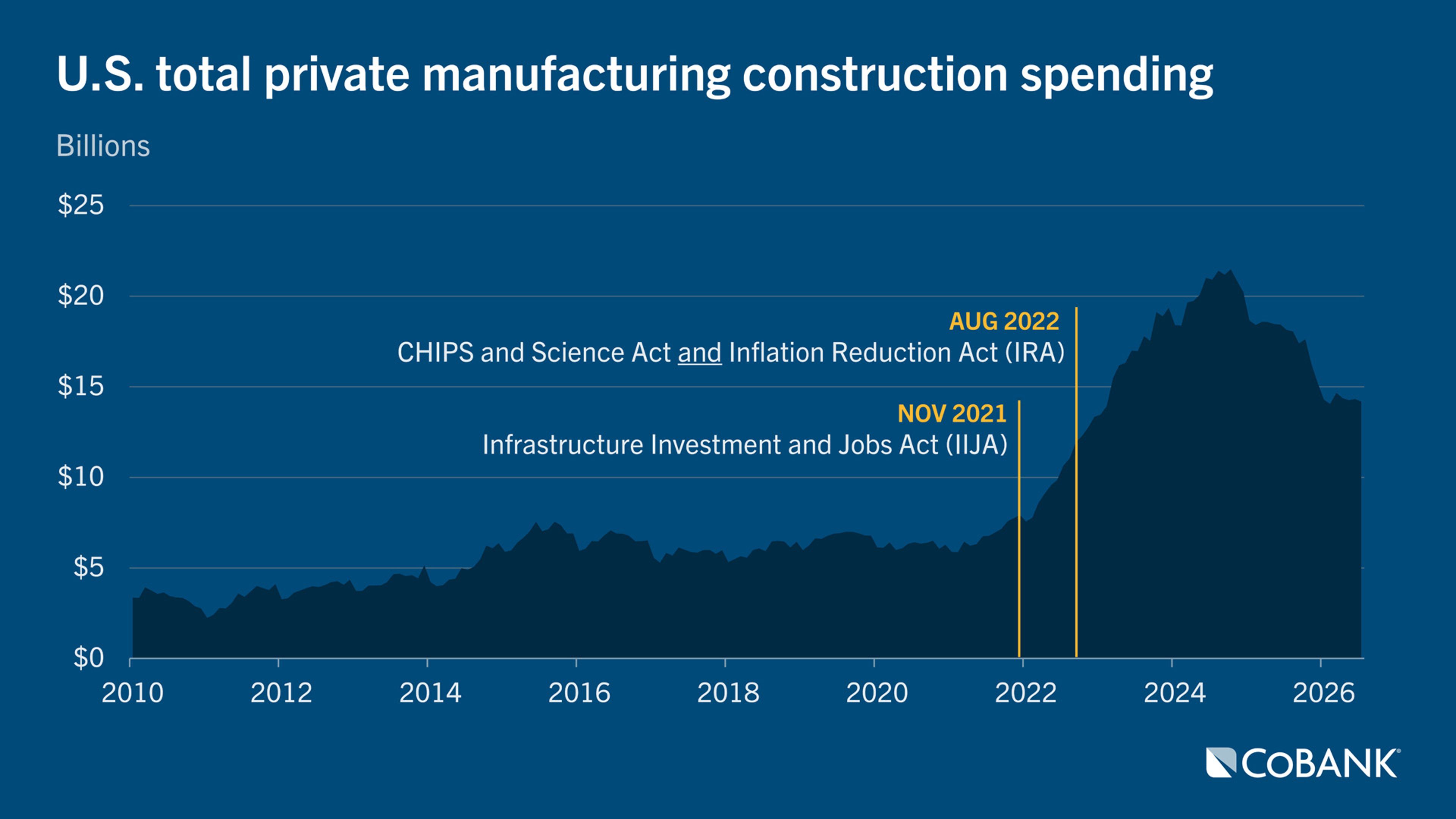
From 2021 to 2023, the U.S. enacted several federal laws to support domestic industrial expansion. Further, the NAIOP Research Foundation estimates that "in addition to federal financial support, billions of dollars of state and local incentives have been awarded to major manufacturing projects." Together, these efforts drove a historic resurgence in investment across high-tech and digitalization (chips, semiconductors, satellites and related technologies), automotive and transportation, energy and biomanufacturing.
While investment peaked in late 2024, projects funded since 2021 are now coming online and driving electricity demand. Industrial retail sales have grown at a 1% annual rate since 2021, while key industrial and energy-producing states posted gains ranging from 2% to nearly 12%.
Broad-based growth raises the stakes for utilities
This perfect storm of demand growth is impacting utilities across the U.S. The IEA notes that “the resurgence signals a new era in which electricity is a major energy input to some of the most dynamic drivers of global economies.” Even utilities without significant data center development are seeing rising load, requiring greater investment in generation, transmission, and distribution infrastructure and presenting opportunities and challenges as utilities adapt to a fundamentally different demand environment.
Disclaimer: The information provided in this report is not intended to be investment, tax, or legal advice and should not be relied upon by recipients for such purposes. The information contained in this report has been compiled from what CoBank regards as reliable sources. However, CoBank does not make any representation or warranty regarding the content, and disclaims any responsibility for the information, materials, third-party opinions, and data included in this report. In no event will CoBank be liable for any decision made or actions taken by any person or persons relying on the information contained in this report.