
Why long-term interest rates are staying high


Key points
- Long-term rates have moved sharply higher as markets reassess the path of Federal Reserve policy.
- The supply of debt is putting additional upward pressure on yields.
- The rate outlook has shifted from “temporary spike” to “higher for longer.”
Intermediate- and long-term interest rates have surged higher this year, but economists can’t agree on exactly why. Some point to persistent inflation expectations and a resilient economy. Others blame government deficits, AI investment, reduced foreign demand for U.S. debt or declining confidence in economic policy. In our view, the competing explanations can largely be reduced to two related forces:
- Investors expect short-term interest rates to remain higher for longer.
- Governments and corporations are asking markets to finance an ever-increasing level of outstanding debt.
Higher-for-longer rate expectations
The yield on 10-year Treasuries reflects, in part, the short-term interest rates investors expect over the coming decade. When inflation remains elevated or the economy proves stronger than anticipated, investors expect the Fed to maintain higher rates for longer. That expectation raises yields on longer-term bonds today.
A recent study by the Centre for Economic Policy Research provides strong evidence of this connection. Since August 2020, narrow windows surrounding monthly employment reports and speeches by prominent Fed officials accounted for roughly 90% of the increase in the 10-year Treasury yield. Those windows cover less than one-quarter of all trading days. In other words, long-term yields have risen primarily when investors were anticipating imminent central bank monetary policy news.
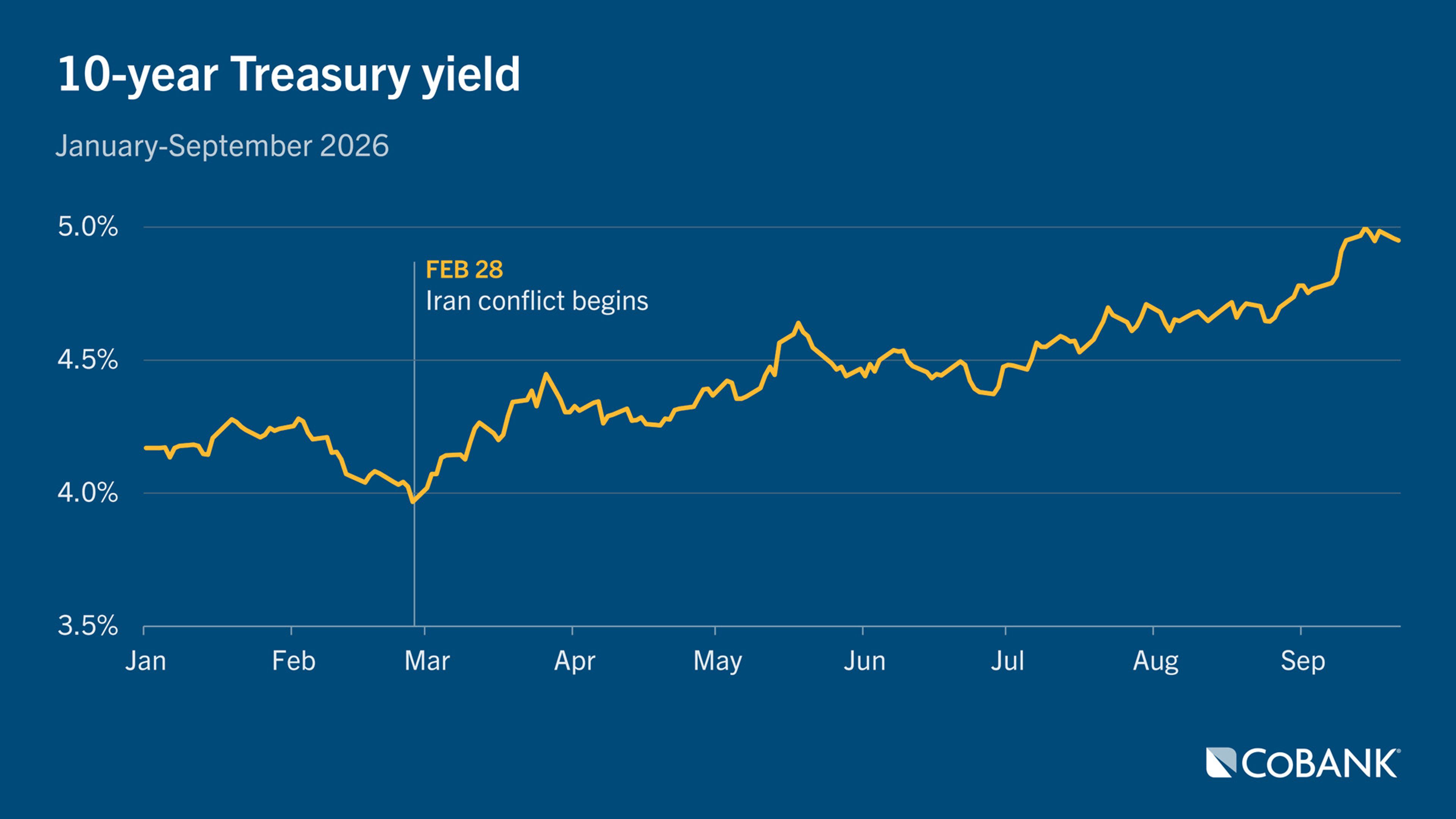
Recent market movements illustrate that relationship. The 10-year Treasury yield has risen a full percentage point since March 1, immediately after the Iran conflict disrupted energy markets. As oil prices surged, markets first scaled back expectations for rate cuts and then began preparing for rate hikes. The conflict cannot explain everything that has happened since March, but the timing and the initial market reaction suggest it was more than a coincidence.
Growing competition for capital
The second force driving rates higher is growing competition for investors’ money. Governments are financing large deficits and refinancing ever-larger debts that are coming due. At the same time, corporations are borrowing record amounts to build data centers, power plants, electric grid infrastructure and other facilities associated with AI. Defense and conventional infrastructure spending add further demands.
Investors must absorb a rapidly growing supply of bonds, which puts upward pressure on yields — yields rise until investors are willing to buy the available debt. Global sovereign and corporate bond debt increased from about $100 trillion in 2023 to $109 trillion in 2025 according to the OECD, and our projection places it at about $114 trillion in 2026. Governments and corporations are expected to issue a record $29 trillion of bonds this year. Although most of that issuance will refinance maturing debt rather than increase total debt, investors must still supply the capital.
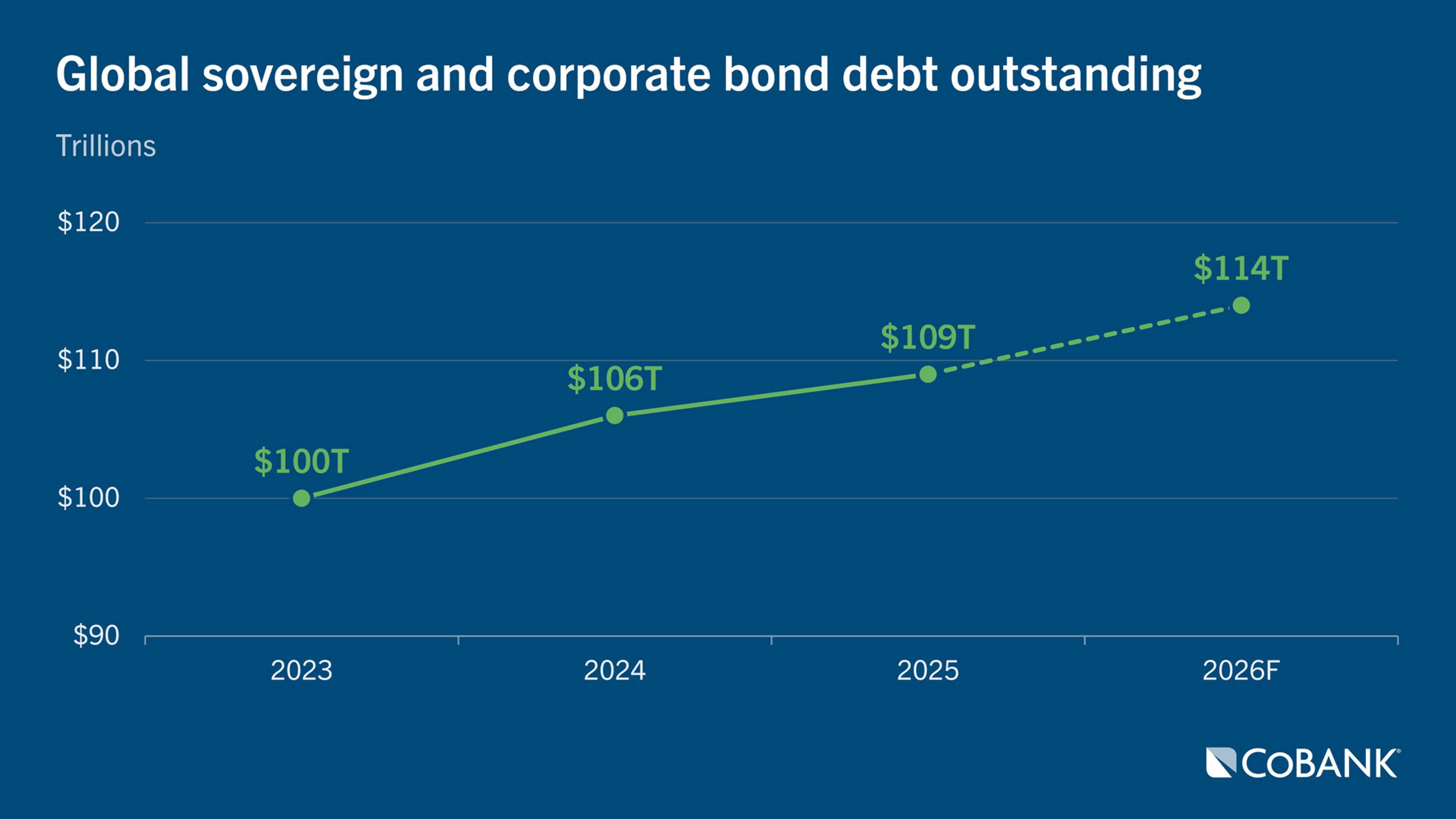
A 14% increase in global debt over three years is not without precedent: Global borrowing also surged during the COVID-19 pandemic. However, today’s financing environment is very different: One-year Treasury yields are 4.4%, compared with essentially zero during the pandemic. Moreover, central banks are reducing their bond holdings, meaning private investors must absorb more of the debt. When governments and businesses want to borrow more than investors are willing to lend at existing rates, yields must rise until willing buyers step forward.
The Fed’s newly released interest rate projections, known as the “dot plot,” reinforce the higher-for-longer outlook. The median participant expects the Fed funds to end 2028 at 3.9%, its current level. Given persistent inflation and the ever-growing supply of government and corporate debt, don’t expect longer-term rates to decline anytime soon.
Disclaimer: The information provided in this report is not intended to be investment, tax, or legal advice and should not be relied upon by recipients for such purposes. The information contained in this report has been compiled from what CoBank regards as reliable sources. However, CoBank does not make any representation or warranty regarding the content, and disclaims any responsibility for the information, materials, third-party opinions, and data included in this report. In no event will CoBank be liable for any decision made or actions taken by any person or persons relying on the information contained in this report.