
Animal protein markets enter Q4 on uneven footing



Key points
- Margin and pricing risks will look very different in the fourth quarter after the grilling season exposed uneven animal protein markets.
- Beef has become more import-dependent as tight cattle supplies, reduced slaughter and strong domestic demand expose supply gaps.
- Pork remains export-reliant as heavier hog weights and modest slaughter gains add supply while domestic demand remains uneven.
- Chicken supply growth is becoming more visible as placements and hatchery indicators improve, even as wholesale values remain pressured.
The third quarter reinforced a clear split across animal protein markets. Beef remains constrained by cattle availability, pork has enough supply but needs stronger domestic uptake, and chicken is expanding production into a more price-sensitive environment. Grilling season demand was durable, but each sector faces a different margin challenge. Tight beef supplies, excess pork availability and expanding chicken production will create very different margin and pricing risks in the fourth quarter.
Cow-calf producers remain supported by scarce cattle and strong prices, while beef packing capacity remains underutilized. Pork producers have benefited from lower feed costs but remain exposed to export concentration and uneven demand. Broiler integrators have the clearest path to volume growth, but only if demand can absorb added production.
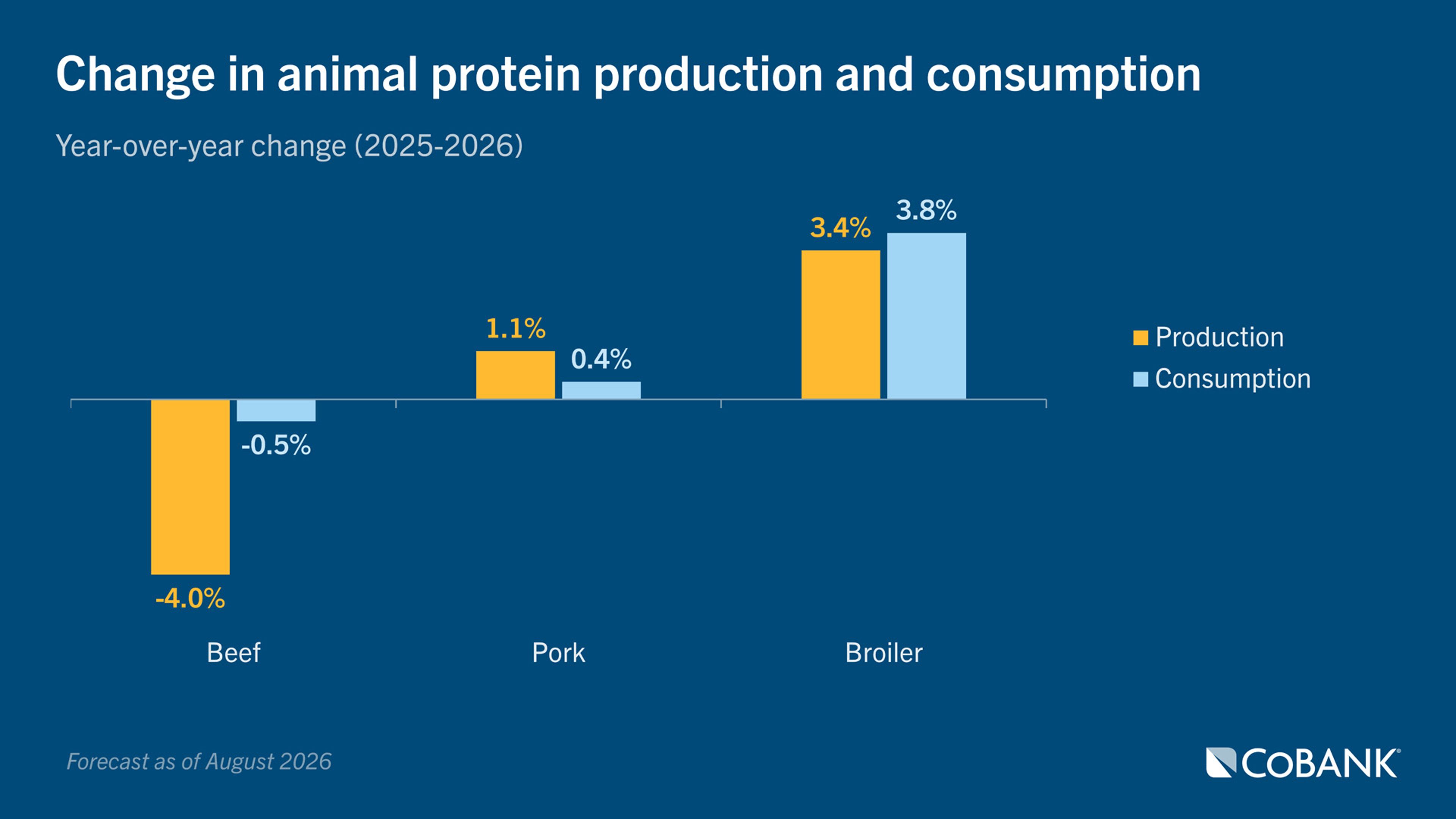
Beef: Import reliance reflects the depth of the cattle shortage
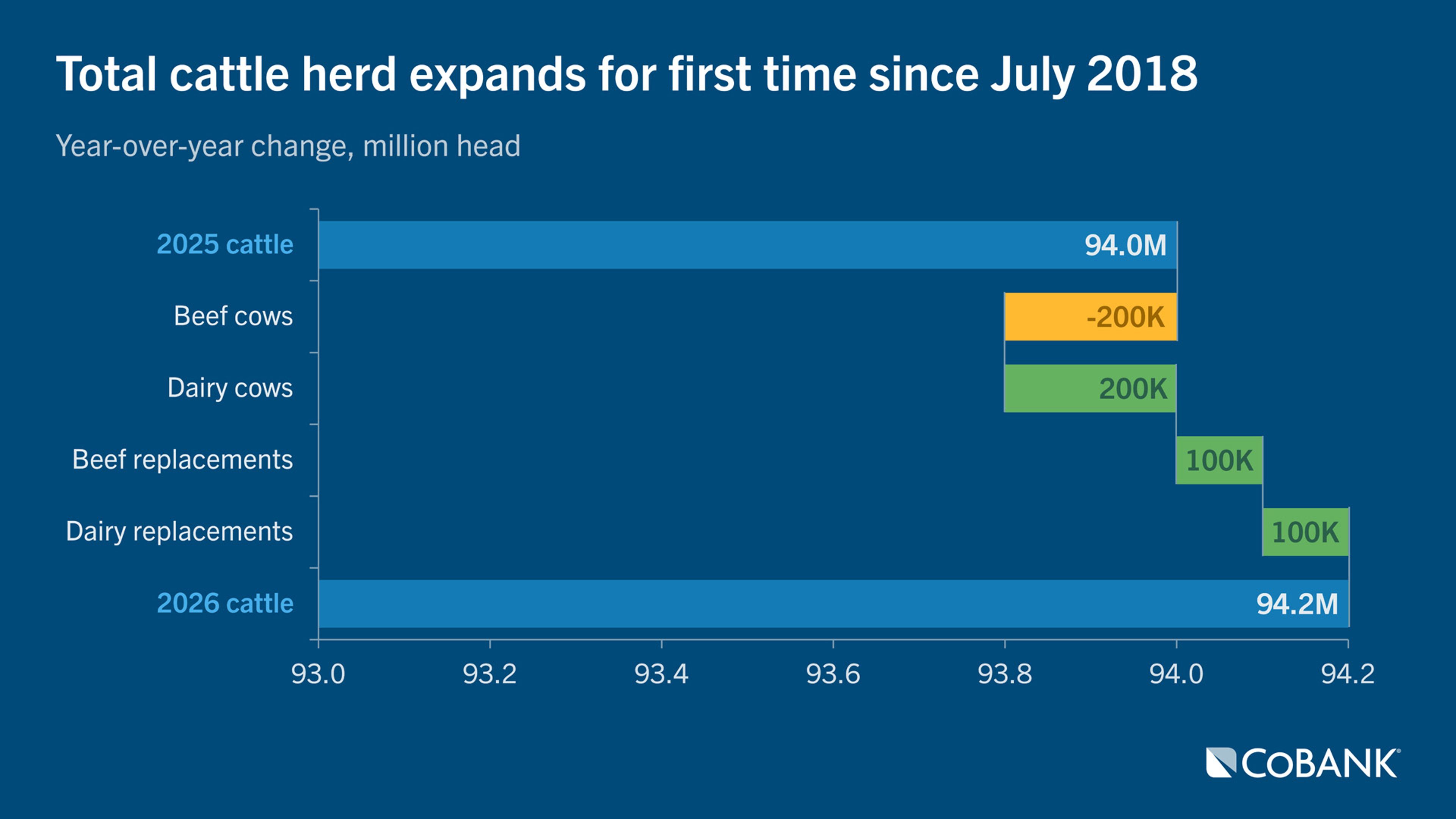
The beef sector remains defined by strong consumer demand and limited ability to expand supplies quickly. Total cattle inventory in USDA’s July Cattle report rose to 94.2 million head, up 0.2% year over year and the first increase since 2018, while beef cow numbers continued to decline. A marginal increase in beef replacement heifers points to the earliest stage of retention, but rebuilding remains slow because of high replacement costs, drought risks and limited heifer availability.
Trade was another major theme in the third quarter. Reopening the Douglas, Arizona, port for live cattle imports from Mexico spurred optimism after concerns about New World screwworm disrupted flows for nearly two years. The U.S. also continues to import sizable volumes of lean beef trim while exports have softened. An important distinction is that U.S. beef imports consist mostly of lean trim blended into domestic ground beef. With slaughter still below long-term levels, cattle availability will remain one of the beef sector’s biggest constraints in the fourth quarter.
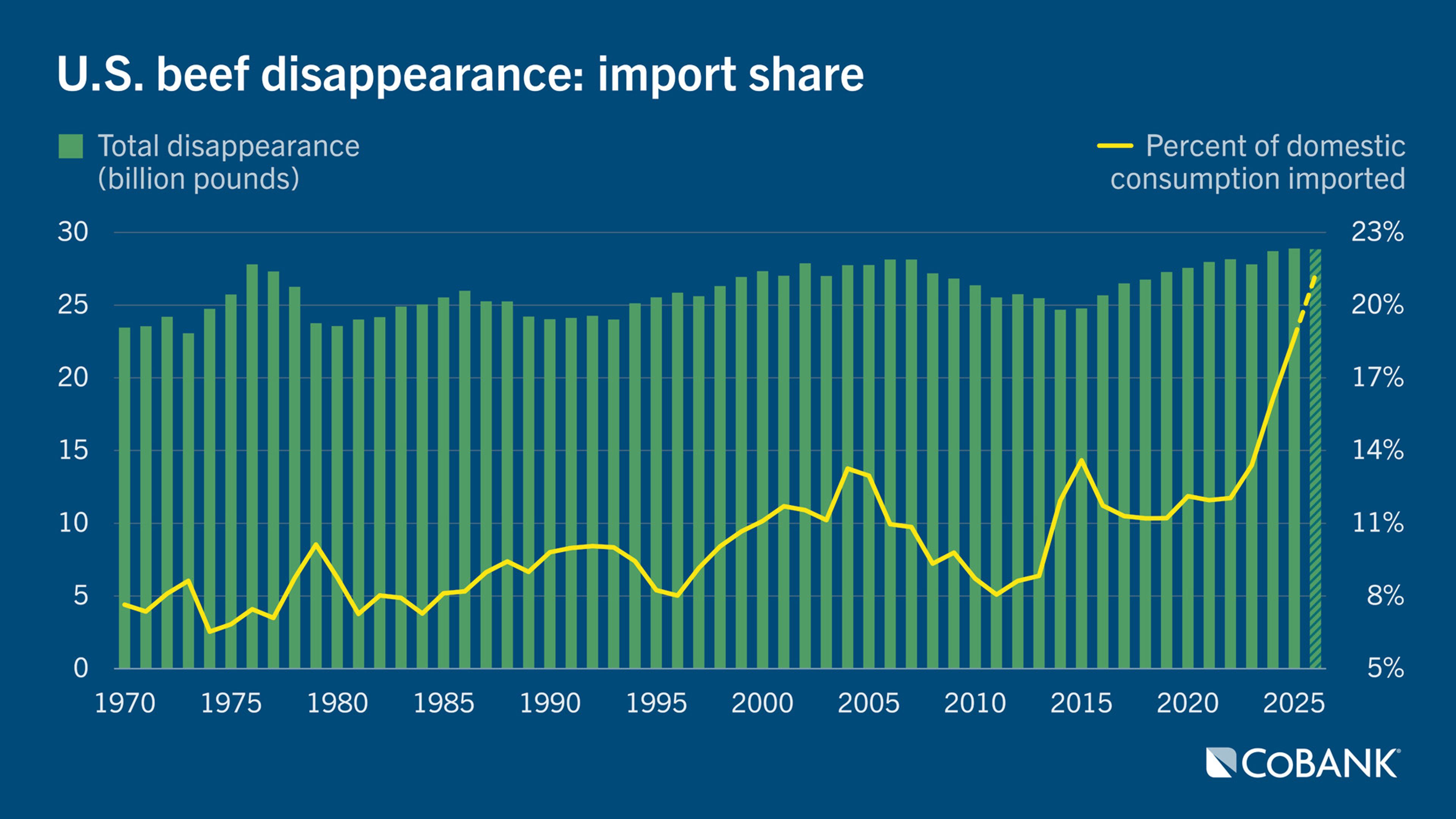
Scarce supply continues to favor cow-calf producers but raises procurement risk for feeders, packers, retailers and foodservice operators. As of mid-September 2026, 58% of the U.S. cattle inventory remained in moderate to exceptional drought, creating another potential constraint on heifer retention and the pace of beef-cow herd rebuilding. Until herd rebuilding becomes visible and sustained, imported beef will remain an important part of the U.S. beef balance sheet.
Pork: More supply, but exports remain the release valve
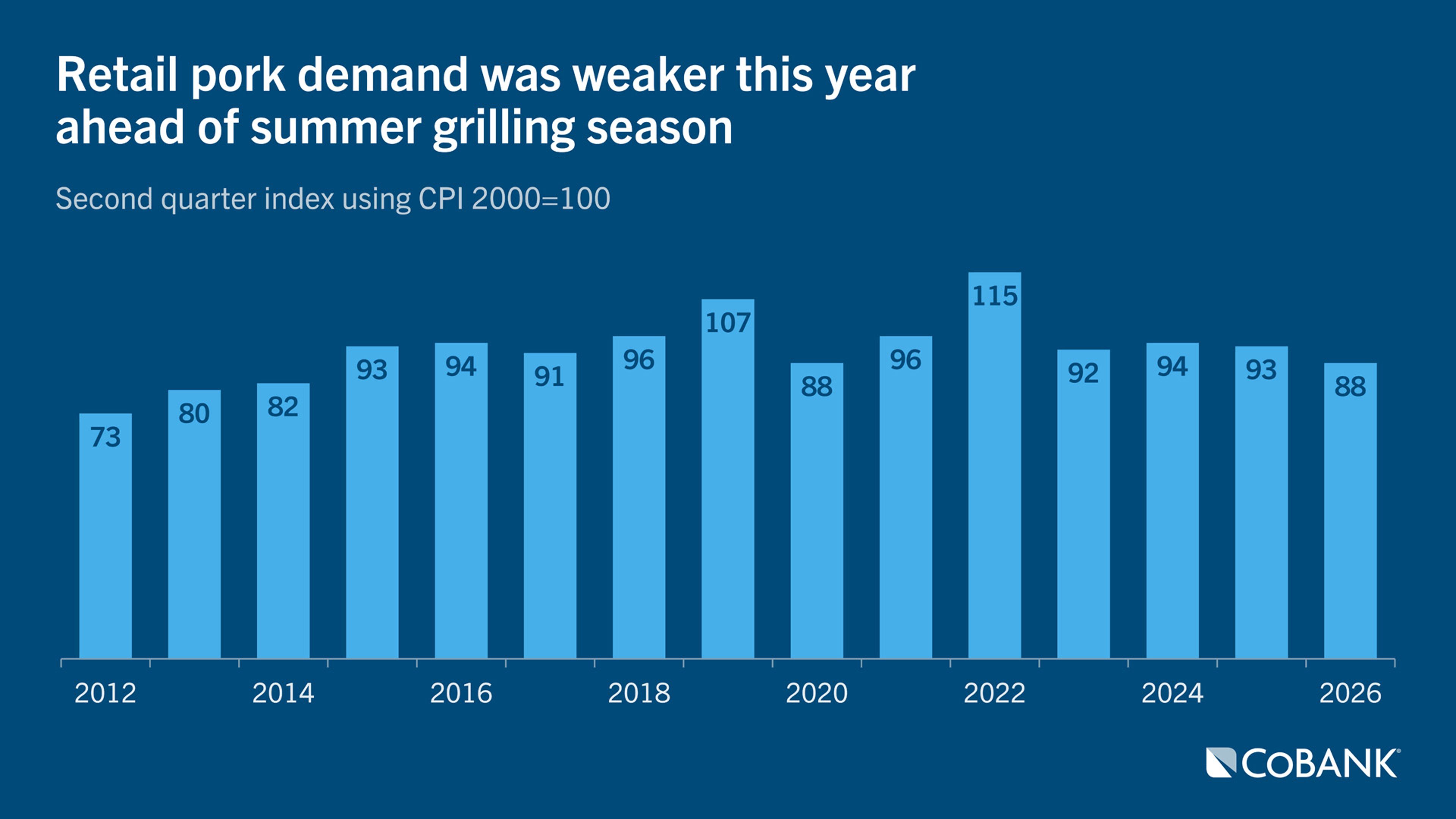
Pork production is running modestly above year-ago levels, but domestic demand has not kept pace. The retail pork demand index fell to its lowest level since 2020 ahead of grilling season, making exports critical to clearing supply. Longer term, pork needs to become an easier consumer choice through convenience, value, flavor and product innovation.
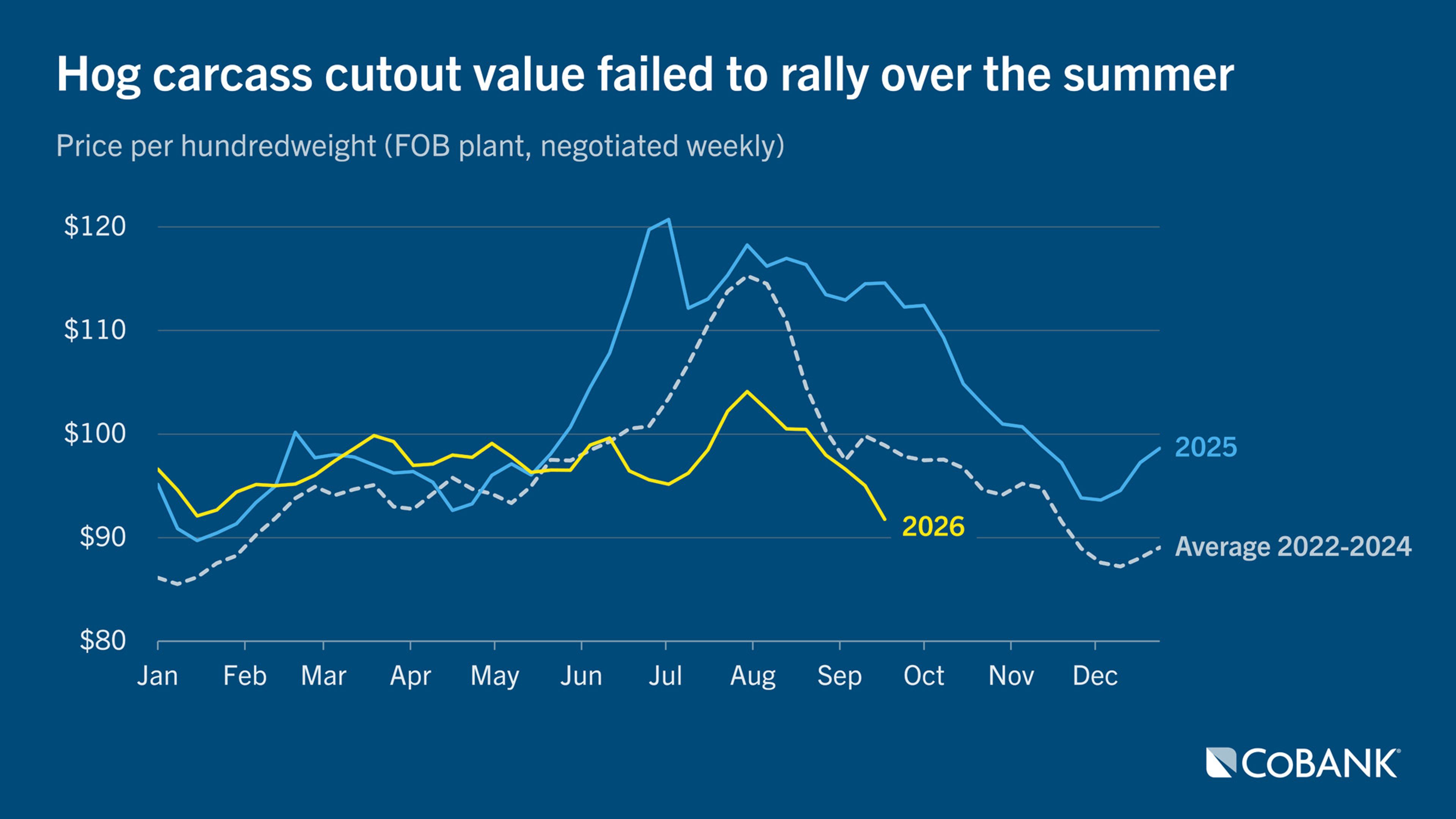
USDA forecasts indicate production will moderately outpace disappearance through 2026, a gap that showed up this summer when the cutout missed its normal seasonal rally. Rising corn prices are pushing feed costs higher, compounding the effects of soft pork demand. Elevated feed, fuel and operating expenses will likely limit pork industry expansion plans.
USDA’s Economic Research Service expects 2026 pork exports to reach 7.2 billion pounds, 2.9% above 2025, even after early-summer shipments to Mexico slowed following pseudorabies virus-related restrictions on Iowa and Texas pork. Mexico remains the top U.S. export destination and is especially important for hams, while the opportunity to export to China continues to fade as its domestic production recovers and consumer demand softens.
Heading into the holidays, hams, bellies and cold storage will show whether seasonal demand can clean up product or whether inventories continue to weigh on the market.
Chicken: Supply growth is back, and the mix matters
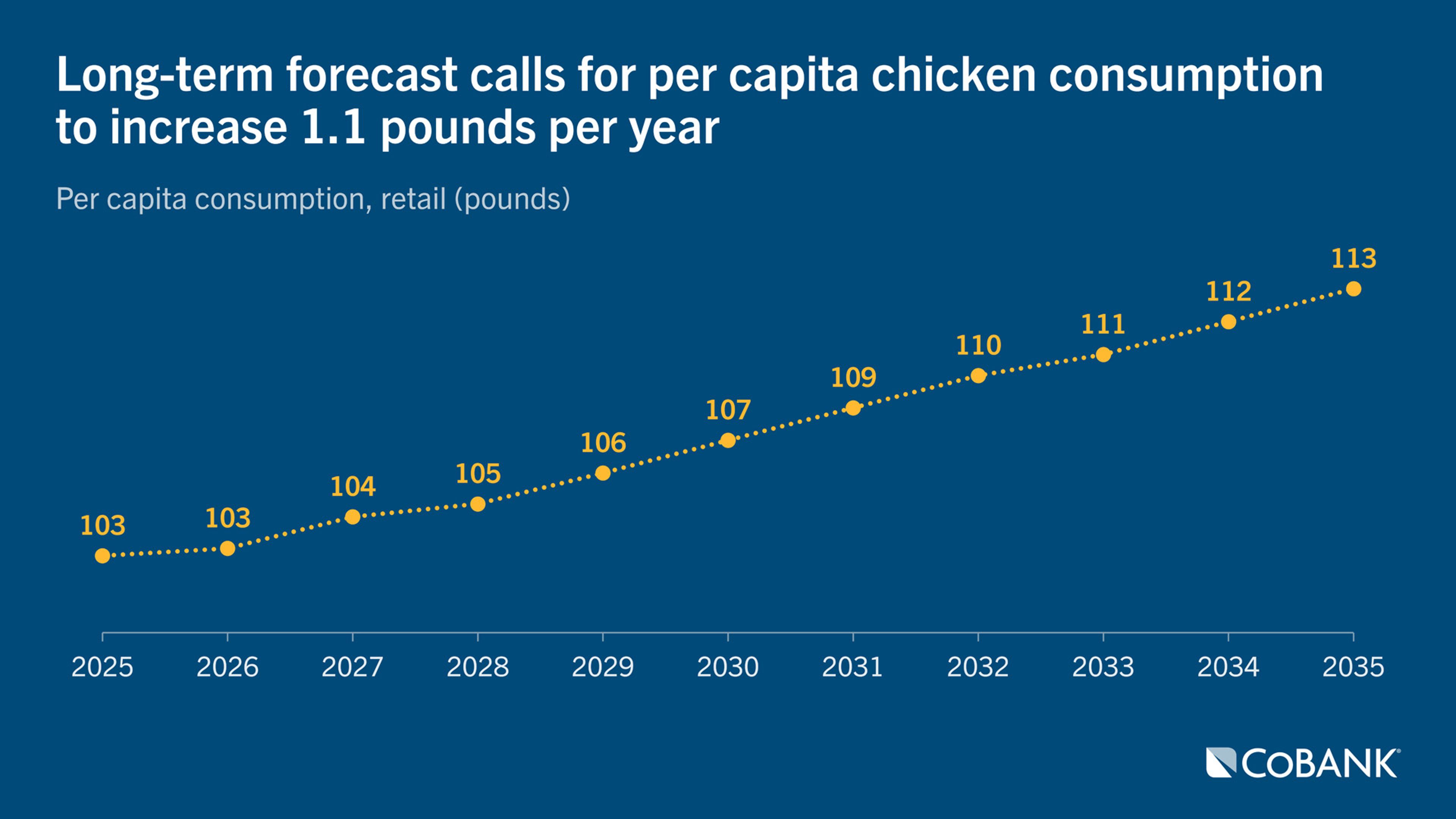
Chicken has the clearest share-of-plate growth opportunity, supported by rising production, improved hatchery indicators and heavier live weights. The challenge is that commodity broiler margins remain compressed as wholesale values stay pressured.
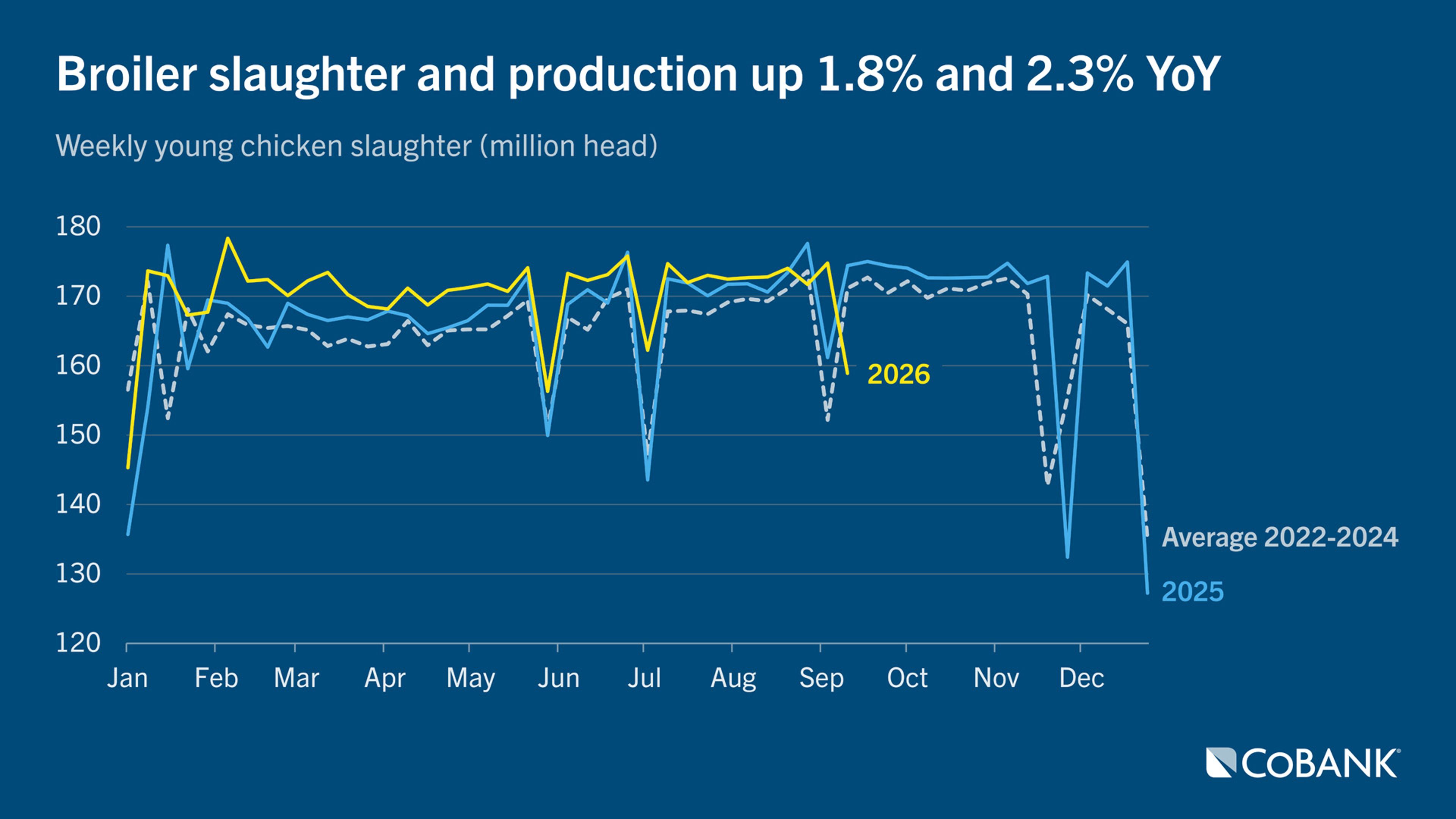
Broiler production ran moderately above year-ago levels during the third quarter. Weekly data from USDA’s Agricultural Marketing Service showed harvest roughly 2% higher year over year. Meanwhile, monthly data from USDA’s National Agricultural Statistics Service confirmed stronger June and July output, including record monthly production. The two series are not perfectly comparable, but both show renewed growth. Lower year over year cold-storage holdings suggest the market has not yet become severely backed up.
Chicken remains well positioned on value, convenience and menu flexibility, but quick-service restaurant sales gains appear more measured than headline growth suggests. Chicken-chain sales grew 5.3% in 2025, outpacing broader top 500-chain restaurant growth, though traffic remains pressured and recent gains appear driven more by pricing than guest counts. Imported beef could add menu competition this fall through ground beef promotions or limited-time offers.
Eggs and turkey also deserve attention heading into the holidays. The table-egg layer flock has recovered from highly pathogenic avian influenza losses, helping stabilize retail egg prices for holiday baking and ingredient demand. Turkey remains more constrained after heavier avian influenza losses, and elevated prices could encourage some consumers to consider other center-of-plate options.
For the fourth quarter, key watch items are cattle availability and import flows in beef, Mexico demand and cold storage in pork, and placements, wholesale values and QSR traffic in chicken. Cow-calf producers, poultry marketers and value-focused retailers and foodservice operators will likely benefit, while beef packers, pork producers and broiler integrators face the greatest margin pressure. Key signals include heifer retention and cattle imports, Mexican pork demand and cold-storage stocks, and chicken wholesale values and restaurant traffic. Drought, trade disruptions or inventory growth would increase supply and margin risks.
Across proteins, the broader question is whether seasonal demand can absorb available supply while input costs remain elevated.
Disclaimer: The information provided in this report is not intended to be investment, tax, or legal advice and should not be relied upon by recipients for such purposes. The information contained in this report has been compiled from what CoBank regards as reliable sources. However, CoBank does not make any representation or warranty regarding the content, and disclaims any responsibility for the information, materials, third-party opinions, and data included in this report. In no event will CoBank be liable for any decision made or actions taken by any person or persons relying on the information contained in this report.