
Biofuel demand rises on mandates and 45Z tax credits

Key points
- Market incentives are boosting soybean oil demand, but imports remain necessary to meet the biomass-based diesel RVO.
- EPA action on 2025 SREs lowered RIN prices, while plans to reallocate 100% of exempted volumes eased lost demand fears.
- Ethanol exports must grow to absorb the additional production that is coming online as the industry strives to claim 45Z tax credits.
Six months after the Environmental Protection Agency proposed a robust increase in the biomass-based diesel renewable volume obligation, the industry must still demonstrate that it can meet the ambitious target. The final quarter of 2026 will lay the foundation for how many, if any, renewable identification numbers can roll over into 2027 and how EPA may set the RVO for 2028 and beyond.
Although biomass-based diesel production pulled back in 2025 due to the uncertainty over the future RVO, the industry is still playing catch-up in 2026. Soybean oil is the clear winner in the feedstock pool for BBD. Overall feedstock use for biofuels has climbed since the RVO release in March but remains below the consistently higher levels seen in 2024.
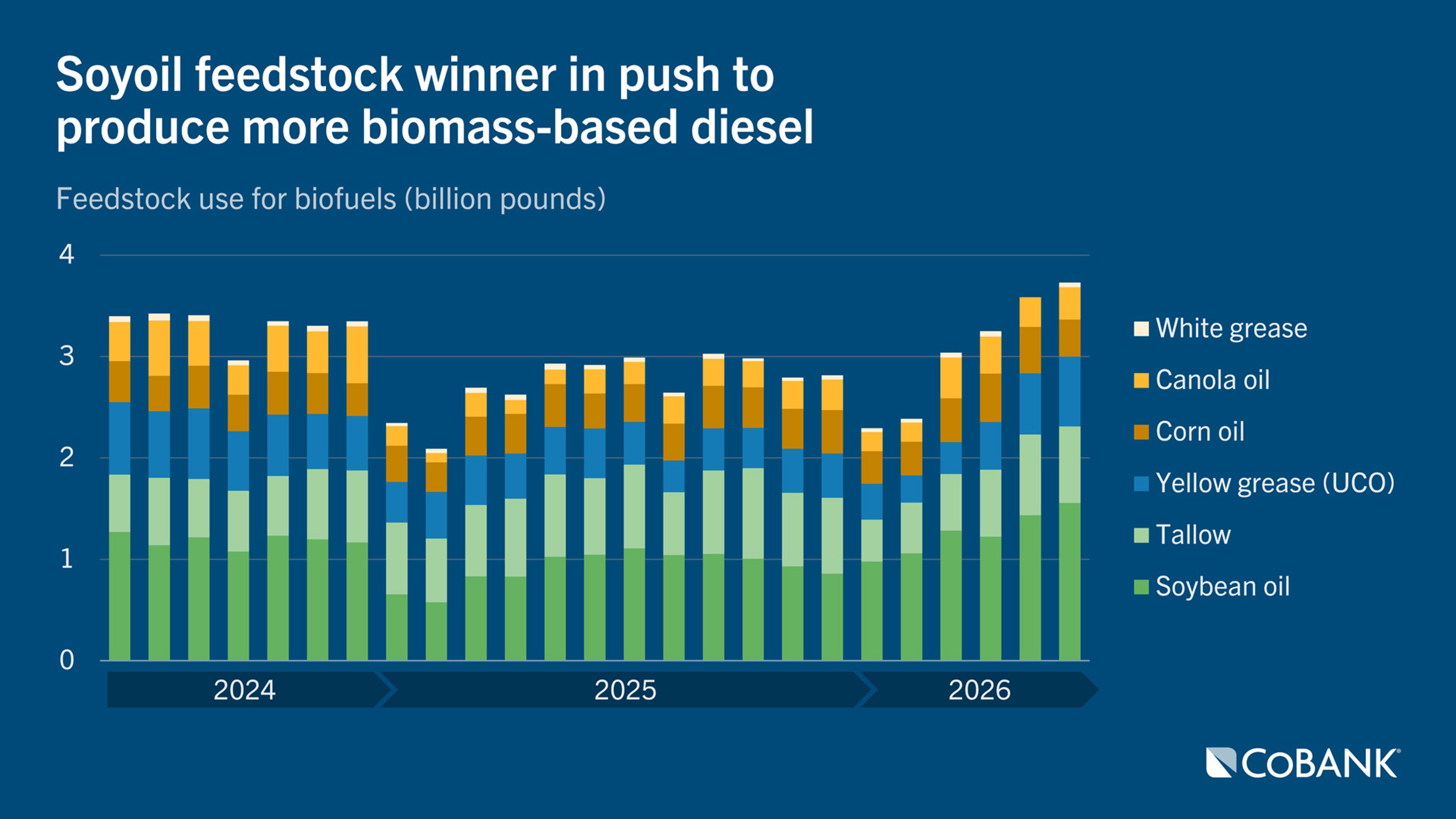
Yet, even with 17 straight months of record domestic crush, producers need imports to fill the gap to meet the high RVO. Used cooking oil imports have increased in recent months to make up for some of the shortfall and could near the record levels seen in 2024/25. Through July, U.S. soybean oil imports for 2025/26 reached approximately 170,000 metric tons, already exceeding the roughly 164,000 tons imported during the entire 2024/25 marketing year. Demetrica estimates 2025/26 soybean oil imports could approach 230,000 metric tons, roughly 50,000 tons above USDA's August projection.
SRE fears eased
Concerns over the Environmental Protection Agency’s handling of 2025 small refinery exemptions eased after it announced plans to exempt 1.76 billion RINs across 29 small refineries. The agency also said it would propose, by the end of October 2026, reallocating 100% of the gap between projected and actual 2025 exempted volumes into the 2026 and 2027 RVOs.
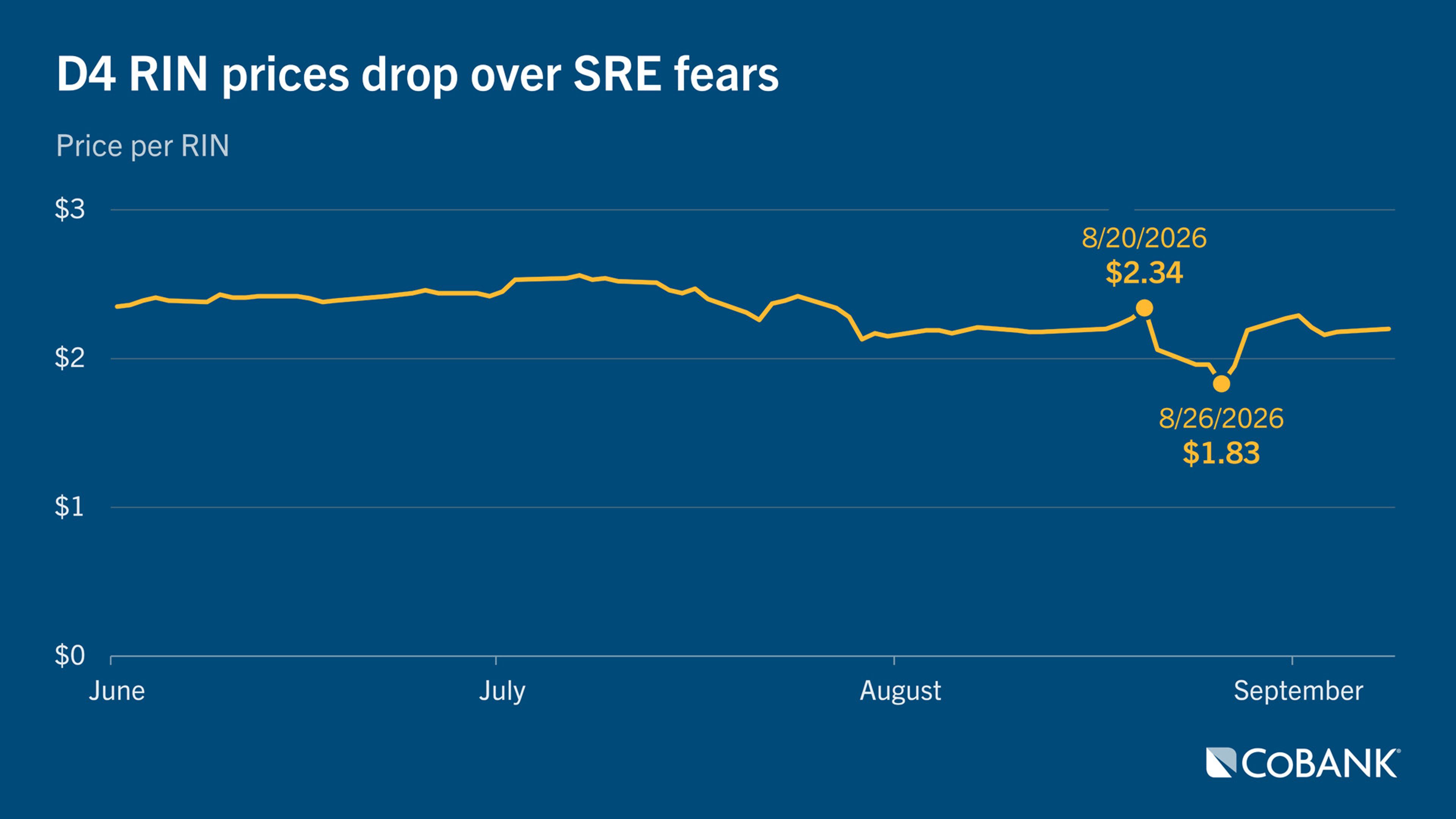
A media report raised fears that increased number of approved SREs could weaken demand, sending soaring D4 RIN prices down to $1.83 on the Thursday before EPA’s final Aug. 31 decision. Prices have since recovered after EPA announced plans for a rule that would reallocate the exempted volumes. Large refiners will still need to purchase RINs to meet obligation mandates if they don’t blend biofuels to create their own RINs.
The industry is now focused on encouraging the EPA to get the supplemental rule right, as well as delivering strong Set 3 volumes for 2028 and beyond that maintain an upward trajectory of biofuel demand.
Exports look to absorb ethanol’s excess production
Heading into the final quarter of the year, the ethanol industry has seen margins swing dramatically higher, boosted by 45Z tax credit values. Ethanol companies such as Green Plains estimate full-year tax credit values in the range of $200 million to $225 million, yet nearly all ethanol plants have received at least the base-level credit of $0.10 to $0.20 cents per gallon produced. Plants with the geology suitable for capture carbon or access to a pipeline can claim higher tax credit values. Because biofuel output determines 45Z tax credits, facilities will seek to maximize production to gain greater value. As a result, ethanol production will increase ahead of the 2029 tax credit expiration.
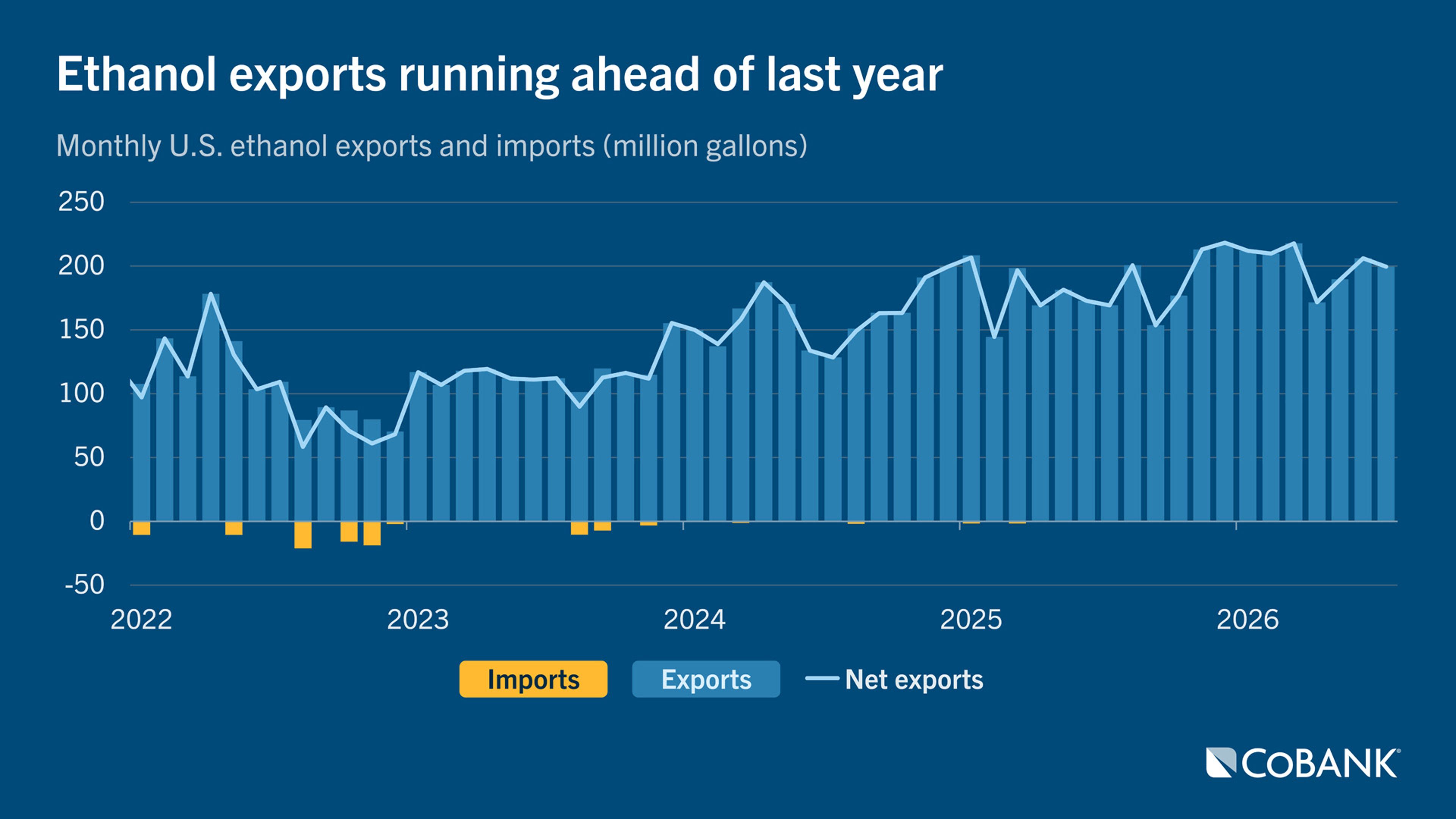
These additional ethanol supplies will need to be used domestically in higher ethanol blends or find their way into the ethanol export markets. Over the past two years, U.S. ethanol exports have set records for both volume and value, driven by rising global import demand and weaker competition from Brazil. And 2026 is pushing those records even higher, as exports were running 13% ahead of last year through July. Canada is the top buyer of U.S. ethanol exports, accounting for 37% of total U.S. ethanol exports and 61% of denatured fuel exports, followed by the European Union. Both markets have found themselves in trade crosshairs with the United States, though neither has included ethanol in its retaliatory trade measures.
In the wake of the Iran war, Brazil, India, Indonesia and other countries are ramping up their biofuel targets. If governments fully implement the proposed mandates, T&E estimates that global biofuel demand could surge 70% by 2030. U.S. consumers are seeing the cost advantage of higher ethanol blends. Currently, ethanol prices have not risen like oil and gasoline, offering savings at the pump and a diversified energy pool.
Disclaimer: The information provided in this report is not intended to be investment, tax, or legal advice and should not be relied upon by recipients for such purposes. The information contained in this report has been compiled from what CoBank regards as reliable sources. However, CoBank does not make any representation or warranty regarding the content, and disclaims any responsibility for the information, materials, third-party opinions, and data included in this report. In no event will CoBank be liable for any decision made or actions taken by any person or persons relying on the information contained in this report.