Dairy is doubling down on exports

Key points
- The dairy category continues to be in growth mode as commercial use expanded 6.3% in the past seven years.
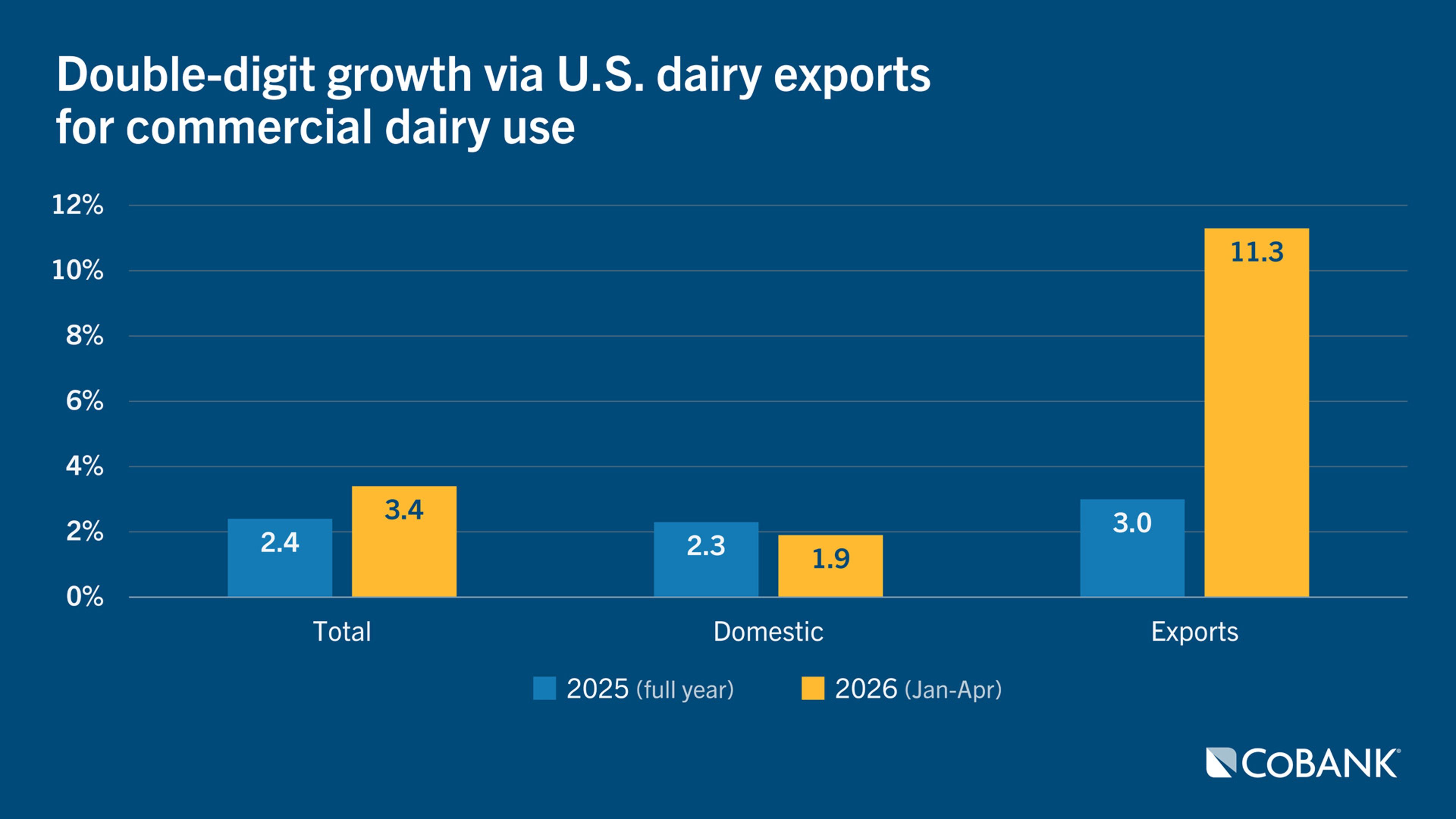
- Domestic and export sales growth nearly mirrored one another in recent years, but exports surged 11.3% from January to April 2026, easily outpacing domestic sales of 1.9%.
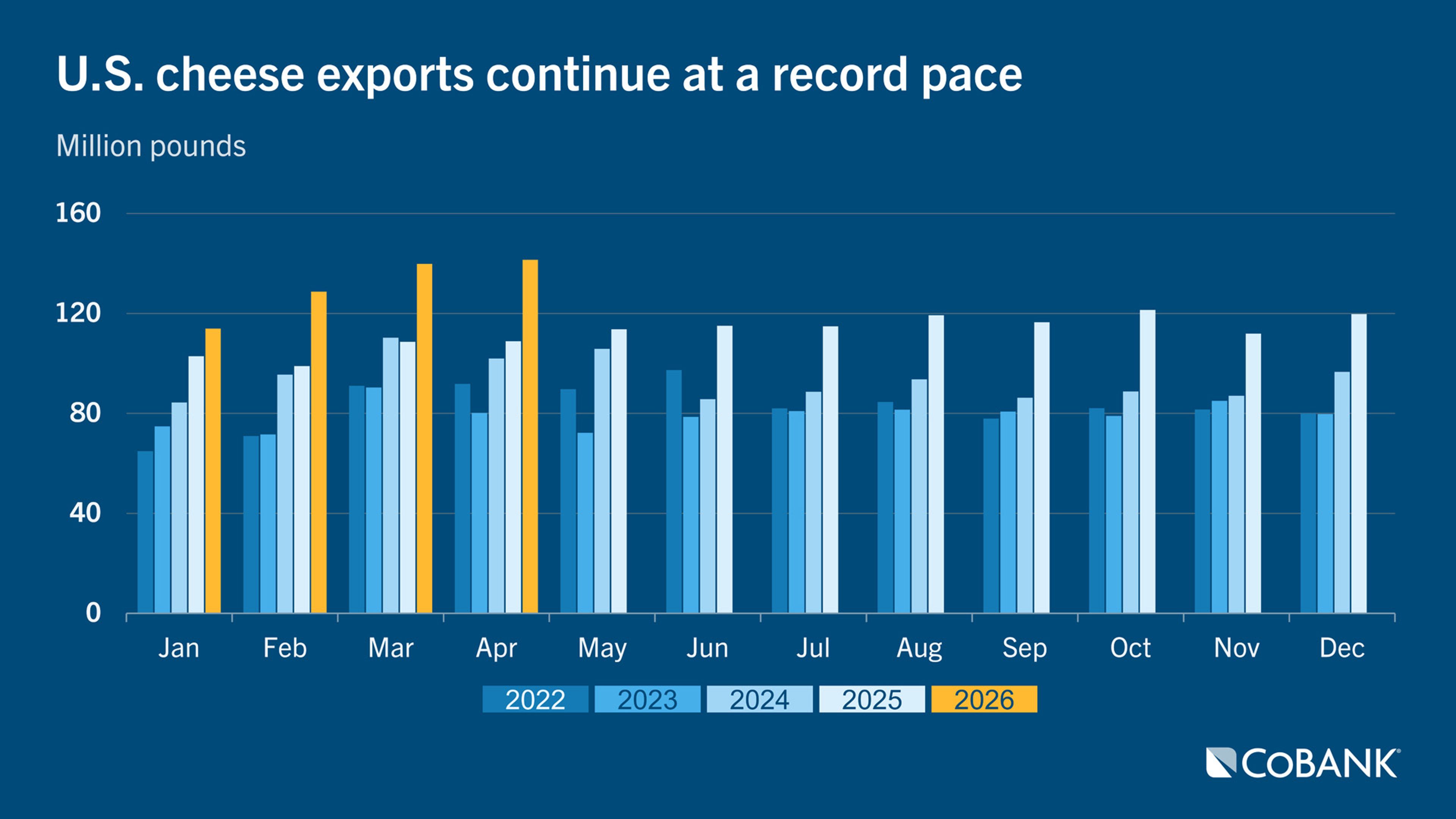
- Cheese is a big reason for that upward trajectory: Exports totaled 523 million pounds, up 25% through the first four months of 2026.
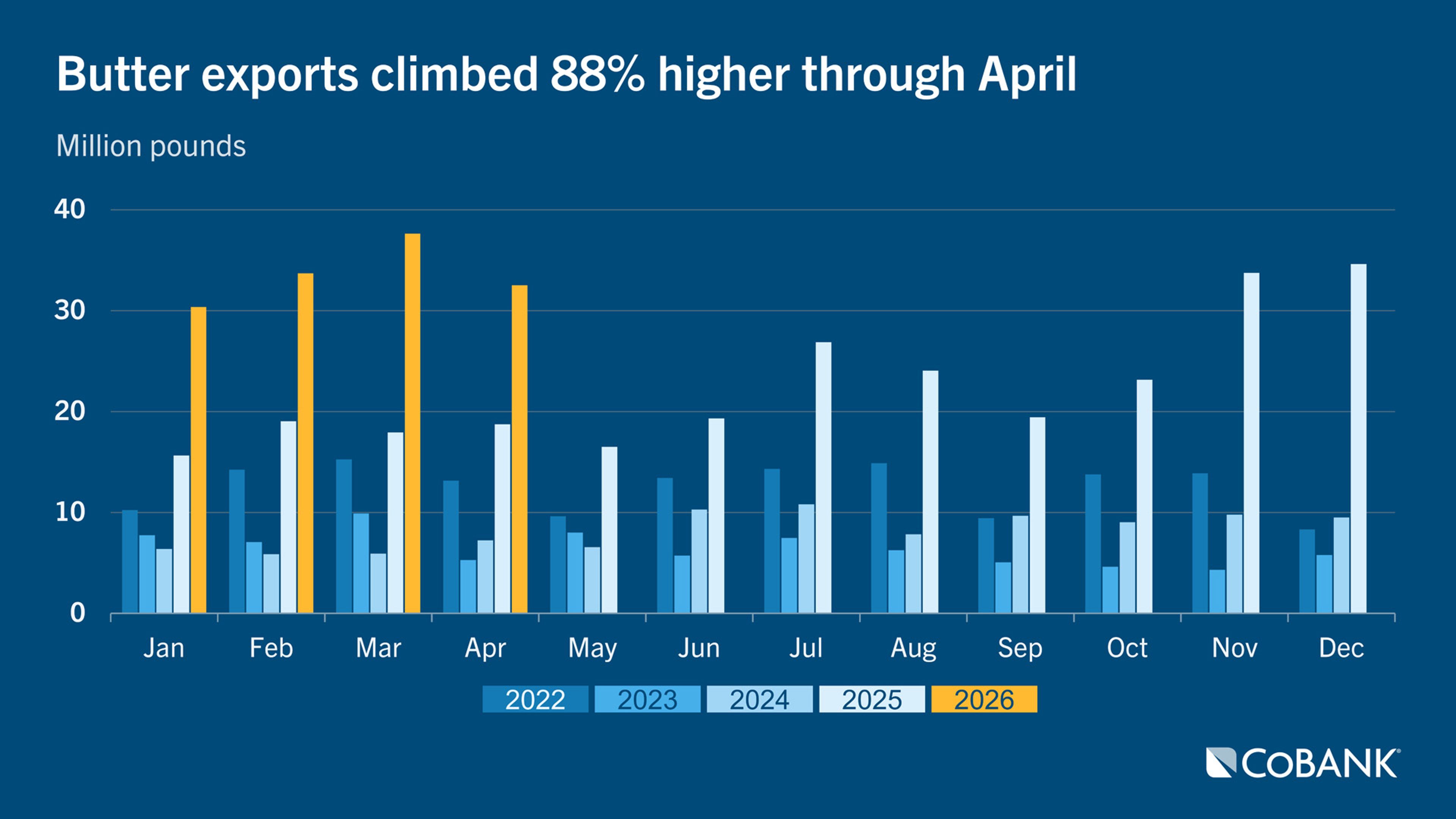
- Record butterfat production from American dairy farms has propelled butter and anhydrous milkfat exports to new highs, expanding 88% through April 2026.
Compared with other U.S. agricultural sectors, dairy is a relative newcomer to the export scene. In 1994, when the North American Free Trade Agreement was created, the U.S. dairy industry exported just 2% to 3% of its milk production via dairy products and ingredients. Fast forward 32 years, and exports now absorb 17% total U.S. milk production.
In recent years, international sales have accelerated for two primary reasons: supply and demand. The U.S. dairy herd has expanded by 184,000 head over the past 12 months to reach 9.665 million head – the largest size in 34 years. That herd expansion has not necessarily been driven by the returns from producing milk, but rather by retaining cows to supply profitable beef-on-dairy calves. Their sales prices range from $1,700 to $2,000 each just a few days after birth.
The second reason exports may matter more than ever before is the static U.S. population. For generations, food manufacturers and marketers became accustomed to a domestic customer base that expanded with each passing year. However, U.S. population growth has slowed to just 0.5%, according to latest data from the U.S. Census Bureau.
Digging into dairy sales, total commercial use has grown from 223.8 billion pounds to 238.0 billion pounds for a 6.3% growth rate over the past seven years. However, growth of export sales outpaced domestic sales at 20.5% vs. 3.9%.
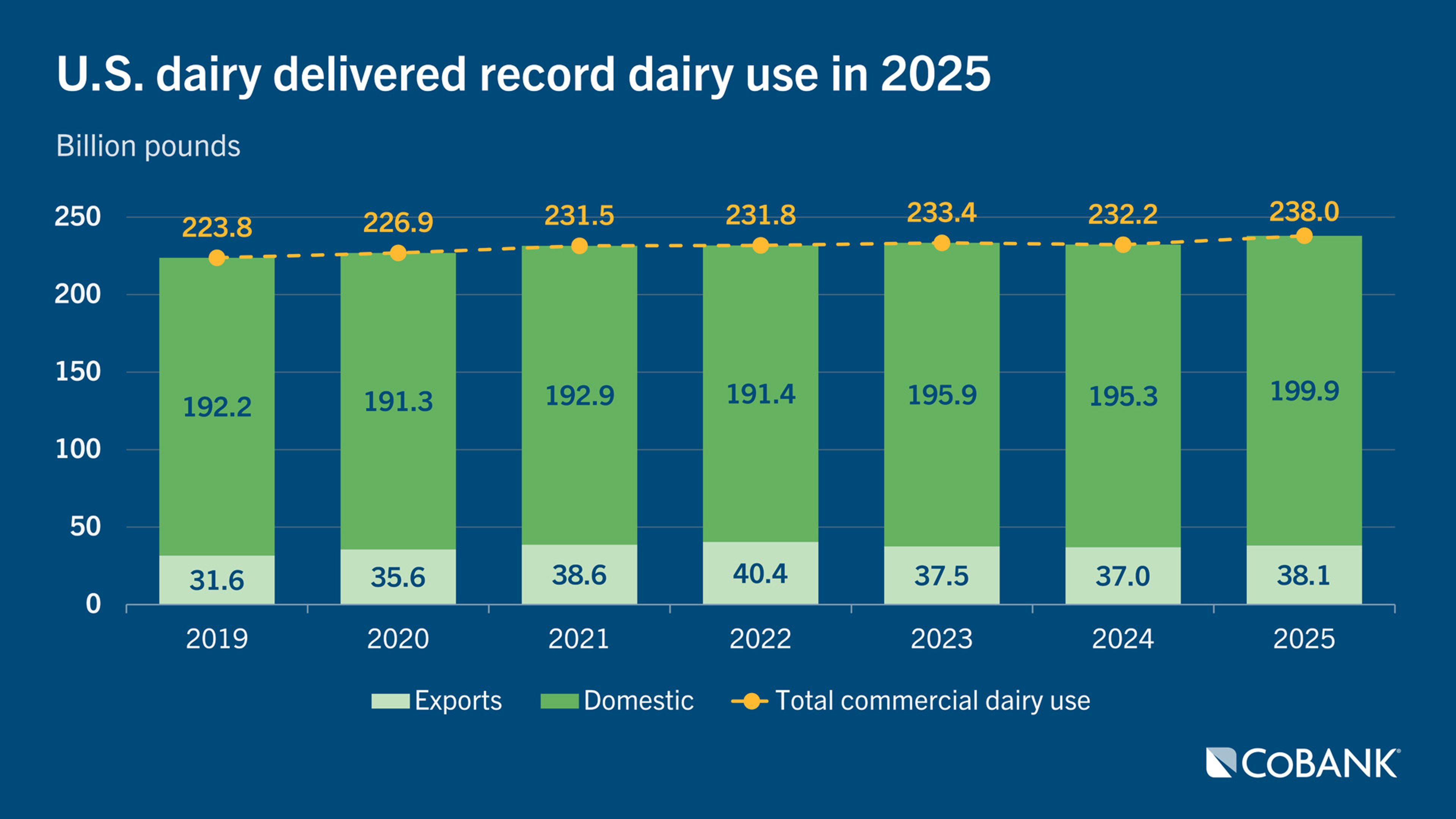
Exports continue to gain momentum. In 2025, export sales grew 3.0% compared to a 2.3% gain in the domestic category. The spread between the two categories has picked up significant traction this year: Export sales escalated by 11.3% from January through April 2026 compared to 1.9% for domestic sales, according to data from USDA and the National Milk Producers Federation.
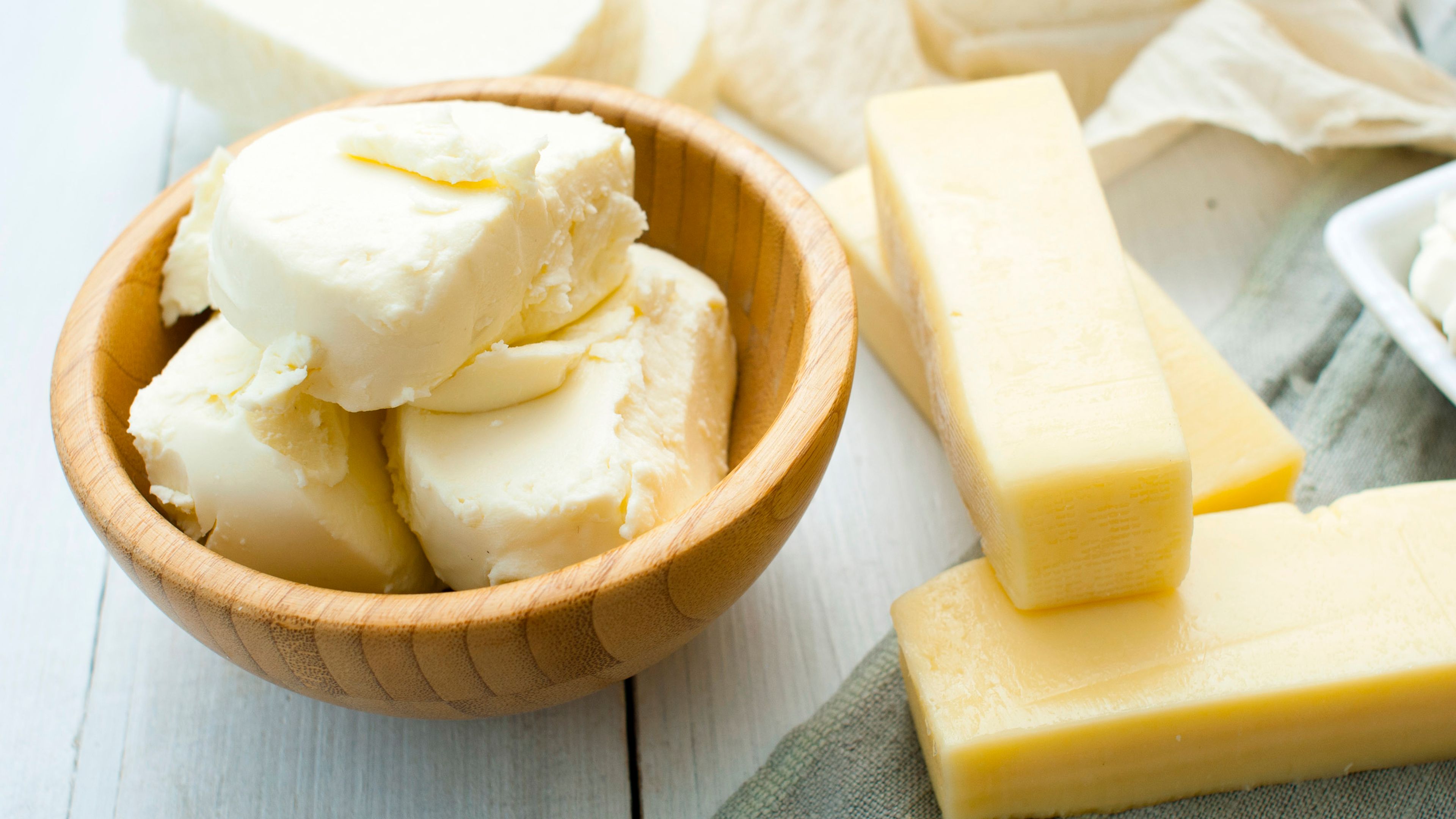
Cheese and butter have set the pace in the export category, which is critical because butterfat is the fastest growing milk component. Cheese absorbs about 49% of all U.S. butterfat production with butter standing a firm second. Butterfat production has been increasing so fast on U.S. dairy farms that some dairy processors have placed caps on butterfat levels for payment in milk checks.
As an outlet for abundant butterfat, cheese and butter have been extremely valuable export products. In May 2025, U.S. cheese exports passed the 110-million-pound mark for the first time in any one month — the new normal as sales have held near that level and climbed even higher. By this April, U.S. cheese exports set a third consecutive monthly record at 141.2 million pounds. Overall, cheese exports totaled 523 million pounds, up 25% year-to-date, with value up 10% to $1.04 billion through the first four months of 2026. Mexico continues to lead the market, followed by South Korea, Japan and Australia.
While the cheese story is impressive, butter usurps that narrative: The U.S. exported a record 269 million pounds in 2025. That was up a whopping 171% over the previous year, with 60% of those exports coming in the final five months of the year. The pace has accelerated into the new year with butter and anhydrous milkfat exports totaling 134 million pounds through April, up 88% when compared to the first four months of 2025. Perhaps more impressive, butter exports from January to April 2026 are nearly double the entirety of 2023.
Lower cheese prices have boosted international shipments, with U.S. Cheddar selling near $1.45 per pound compared to New Zealand Mozzarella at $1.70 and European Gouda at $2.05 per pound. The difference for butter is even higher, with the U.S. selling for $1.70 per pound compared to $2 in Europe and $2.70 in Oceania. Those price spreads will keep U.S. cheese and butter sales moving on the international front.
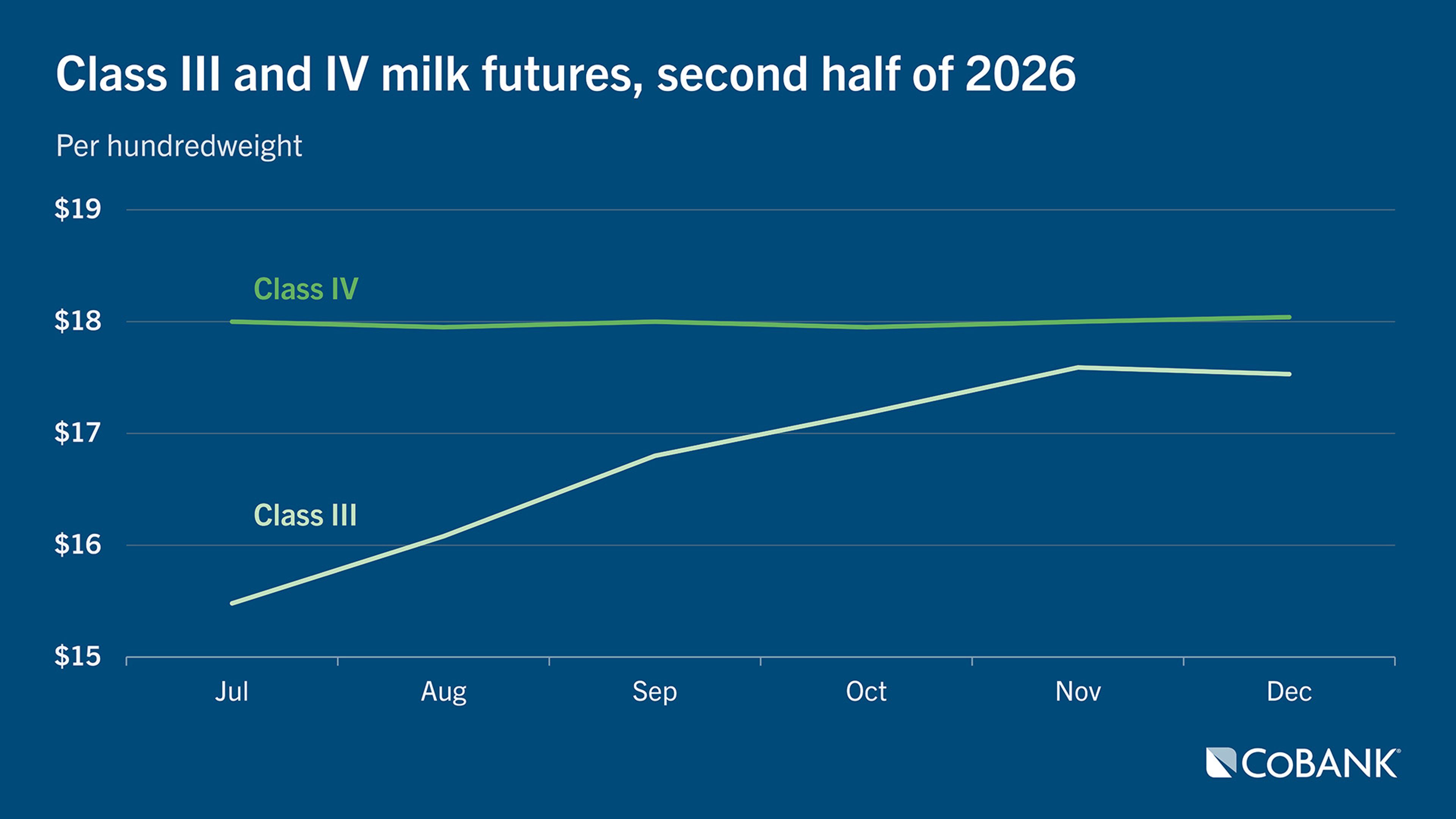
Bringing this home to a milk price forecast, Class IV milk prices strengthened in recent months: Record nonfat dry milk prices climbed into the $2.30 per pound range and pushed the May Class IV milk price to $22.32 per hundredweight. With nonfat dry milk values dropping to $1.50 per pound in early July, Class IV milk futures have moved to the $18 per hundredweight range. On the flip side, Class III milk hovered in the $16 range from February through May. When looking at the rest of the year, Class III milk futures begin to climb to the $17.50 range by year’s end based on stronger sales projections. Cheese and butter exports must continue their record-breaking pace for that forecast to hold.
Disclaimer: The information provided in this report is not intended to be investment, tax, or legal advice and should not be relied upon by recipients for such purposes. The information contained in this report has been compiled from what CoBank regards as reliable sources. However, CoBank does not make any representation or warranty regarding the content, and disclaims any responsibility for the information, materials, third-party opinions, and data included in this report. In no event will CoBank be liable for any decision made or actions taken by any person or persons relying on the information contained in this report.